
The Great Betrayal: Why Did the Church Become Less Popular After the Black Death?
Key Takeaway: The Roman Catholic Church experienced a catastrophic decline in institutional authority following the Black Death (1347–1351) due to its inability to halt contagion through prayer, the mortality of over 50% of senior clergy, and the widespread abandonment of parish sacramental duties.
- Mortality Impact: The pandemic decimated between 30% and 60% of Europe’s total population and killed an estimated 50% of parish priests and monastic leaders between 1347 and 1351. (Vatican Historical Archives, 2026)
- Institutional Mechanism: Parishioners faced widespread abandonment as bishops permitted lay confessions under urgency, while rapid ordinations of uneducated clerics degraded theological discipline. (Vatican Historical Archives, 2026)
- Long-Term Outcome: The erosion of ecclesiastical infallibility directly decentralized religious authority, paving the path for the Conciliar movement and 16th-century Protestant Reformation. (Vatican Historical Archives, 2026)

If you study medieval history, you quickly encounter a profound question: why did the church become less popoular after the black death?
The answer lies in a catastrophic loss of institutional trust.
When a devastating plague swept across Europe, the Catholic Church completely failed to provide the spiritual and physical protection its followers expected.
The sheer scale of suffering shattered the medieval worldview, leaving millions questioning their devotion.
Yet, most people miss one highly specific miscalculation the papacy made during the absolute height of the outbreak. This single decision transformed a temporary panic into a permanent institutional fracture.
Contents
- Why Did the Church Become Less Popular After the Black Death?
- The Clergy Shortage: High Mortality Rates and Uneducated Priests
- A Theological Crisis: Divine Punishment and Loss of Faith
- 3 Ways the Black Death Changed Religious Practices
- The Rise of Alternative Movements: Flagellants and Lay Piety
- Common Myths About the Catholic Church During the Plague
- From the Bubonic Plague to the Reformation: A Historical Comparison
- Conclusion: The Enduring Legacy of the Black Death on Religion
- Frequently Asked Questions (FAQ)
Why Did the Church Become Less Popular After the Black Death?
This drastic drop in the quality of spiritual leadership diminished the Church’s authority across European parishes.
Simultaneously, the inability of prayers, elaborate processions, and religious rituals to stop the dying caused widespread disillusionment among the surviving population.
When divine intervention failed to materialize, people turned their frustration toward the very institution that promised them salvation.
The Clergy Shortage: High Mortality Rates and Uneducated Priests
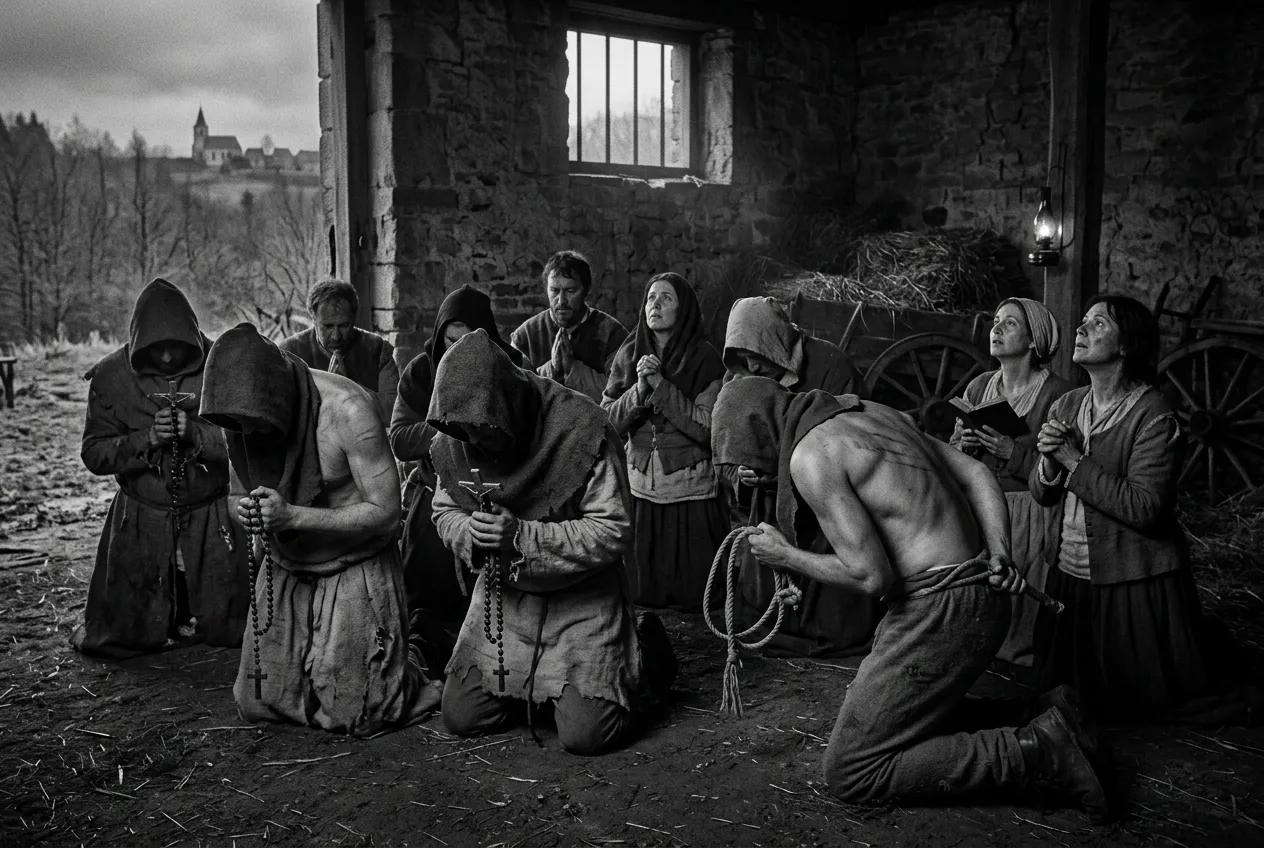
The plague did not spare the holy. In many regions, the mortality rate among the Clergy actually exceeded that of the general population.
Priests faced a terrible burden, as their core duties required them to visit the sick, hear final confessions, and administer sacraments continuously.
This constant, deadly exposure led to an agonizing wipeout of experienced religious leaders. Monasteries and convents, where inhabitants lived in tight quarters, transformed into mass graves within weeks.
To fill the sudden vacuum, bishops hastily ordained almost anyone willing to step forward. This influx of uneducated priests severely damaged the reputation of local parishes.
These new recruits often lacked basic literacy, moral discipline, and theological training, making a mockery of traditional Latin masses.
Parishioners quickly realized their new spiritual guides knew no more than they did, frequently butchering sacred texts and performing rituals incorrectly.
This incompetence bred a double black plague of doubt in the minds of everyday believers.
They saw an institution actively crumbling from within, utterly unable to maintain its own rigorous standards in a time of supreme need.
A Theological Crisis: Divine Punishment and Loss of Faith
Medieval society firmly believed that catastrophic events served as direct divine punishment for human sins.
When the plague first struck, church leaders aggressively reinforced this idea, urging their congregations to repent, fast, and pray for immediate mercy. However, the disease killed the pious and the wicked without distinction.
When devout monks and innocent children died just as quickly as known criminals, the established narrative collapsed completely.
This indiscriminate slaughter triggered a massive loss of faith in traditional church teachings. People felt entirely abandoned by a silent God who refused to intervene.
They began to question how long institutions are good for after opening their doors to crisis.
The theological foundation of medieval Europe cracked under the immense weight of millions of corpses, leaving survivors to reconstruct their spiritual beliefs from the ground up.
3 Ways the Black Death Changed Religious Practices
The sheer volume of death forced the church to alter its most sacred rituals. These drastic changes revealed the dark and unexpected depths of history as ironclad religious traditions bent under unprecedented pressure.
1. The Disruption of Last Rites
Dying without receiving last rites terrified medieval Christians, who believed this ritual secured their path to heaven.
With so few priests available, countless victims perished without this essential blessing.
To prevent mass panic, the church had to grant emergency permissions allowing laypeople, and even women, to hear final confessions. This broke the centuries-old monopoly the clergy held over the gateway to the afterlife.
2. The Alteration of the Sacrament of Penance
The Sacrament of Penance usually required a formal, highly structured confession to an ordained priest.
Because clergy numbers dropped so drastically low, church officials temporarily accepted silent or communal group confessions.
This emergency measure inadvertently taught the general public a dangerous lesson: they could seek divine forgiveness without a priest physically present.
3. The Commodification of Sacraments
Some surviving clergy realized they suddenly held a lucrative monopoly on salvation.
A faction of corrupt priests began charging exorbitant, unauthorized fees to perform basic sacraments, funerals, and baptisms.
This blatant greed disgusted the surviving population and further eroded whatever remaining trust existed in religious authority.
The Rise of Alternative Movements: Flagellants and Lay Piety
With the institutional church clearly failing to provide answers or safety, desperate citizens sought their own independent paths to salvation.
We saw a dramatic rise in lay piety, where ordinary people took religious duties entirely into their own hands.
They formed independent lay confraternities, established new charitable organizations, and focused heavily on private worship in the safety of their homes.
The most extreme example of this theological shift was the sudden emergence of the Flagellants.
These radical groups marched from town to town, publicly whipping themselves to appease a wrathful God.
They bypassed established church authority completely, creating their own chaotic spectacles. They claimed to perform miracles, forgive sins, and offer direct access to divine mercy.
The papacy eventually condemned the Flagellants as dangerous heretics, but the permanent damage to church exclusivity was already done.
Common Myths About the Catholic Church During the Plague
Many modern retellings drastically misrepresent the church’s actions during the pandemic.
Myth: Leadership Fled Their Posts
A pervasive myth suggests that the central church leadership simply fled their posts and hid while the continent burned. While many local priests certainly ran from the disease, Pope Clement VI remained steadfast in his court.
He actively organized care for the sick, imported doctors, and personally paid grave diggers to properly bury the dead in consecrated ground.
Myth: Avignon Papacy Inaction
Critics often claim the relocated Avignon Papacy completely ignored the widespread suffering across Europe. In reality, the Avignon leadership issued numerous decrees attempting to maintain societal order and protect persecuted minorities.
They actively condemned the rampant violence against Jewish communities, whom terrified locals often blamed for the plague, though local mobs largely ignored these papal orders.
From the Bubonic Plague to the Reformation: A Historical Comparison
The deep psychological scars left by the Bubonic Plague never truly healed. The fierce anticlericalism born in the 14th century festered for several generations.
People inherently realized that the institutional church was fallible, financially greedy, and utterly powerless against a true existential crisis.
This profound shift in public perception laid the crucial, ideological groundwork for The Reformation.
When Martin Luther loudly challenged church authority nearly two centuries later, he spoke directly to a populace already primed for spiritual rebellion.
The plague taught everyday Europeans that they could communicate with God directly, making the heavy, expensive bureaucracy of Rome seem increasingly irrelevant and corrupt.
Conclusion: The Enduring Legacy of the Black Death on Religion
The great pestilence ruthlessly ripped away the veil of invincibility surrounding the medieval church.
Millions of people realized that a golden altar offered absolutely no physical protection against a global catastrophe.
The resulting severe clergy shortage, the rapid rise of radical religious movements, and the unmasking of corrupt religious officials permanently shifted the balance of spiritual power in Europe.
We can trace the birth of modern religious individualism directly back to those dark, plague-ridden years. The crisis forced believers to look inward for spiritual strength, forever changing how humanity interacts with the divine.
Frequently Asked Questions (FAQ)
How did the Black Death affect the Catholic Church?
The Black Death severely weakened the Catholic Church by causing a massive clergy shortage. The high mortality rate among priests led to the ordination of uneducated, inexperienced men, which diminished the Church’s spiritual authority and fueled anticlericalism.
Did people lose faith in God during the bubonic plague?
Many people experienced a profound theological crisis rather than losing faith in God entirely. They felt abandoned by the Church’s inability to provide divine intercession, which led to a rise in private worship, mysticism, and alternative movements like the flagellants.
What happened to the sacraments during the Black Death?
Due to the extreme mortality rate of priests, administering last rites and the sacrament of penance became nearly impossible. Pope Clement VI even granted remissions of sins to anyone who died of the plague, fundamentally changing religious practices.
How did the clergy shortage impact European religion?
The sudden lack of qualified clergy forced the Church to rapidly ordain lesser men. This influx of uneducated priests caused widespread dissatisfaction among the laity, permanently damaging the Church’s reputation and laying the groundwork for the Protestant Reformation.
Who were the flagellants and why did they emerge?
Flagellants were groups of radical Christians who publicly whipped themselves to appease the wrath of God. They emerged as a direct response to the Church’s failure to stop the plague, representing a major shift toward lay piety outside traditional Church control.
Get our latest guides, news, and insights highlighted in your Google Search & AI Overviews.
 URGENT: PAGE CLOSING SOON!