
Catholic Confirmation Explained: Sacramental Meaning, Rituals, and Spiritual Gifts
✨ This article was AI edited. Editorial responsibility: Saint Jerome Church.
Produced with AI. This article was artificially generated. Editorial responsibility: Saint Jerome Church.
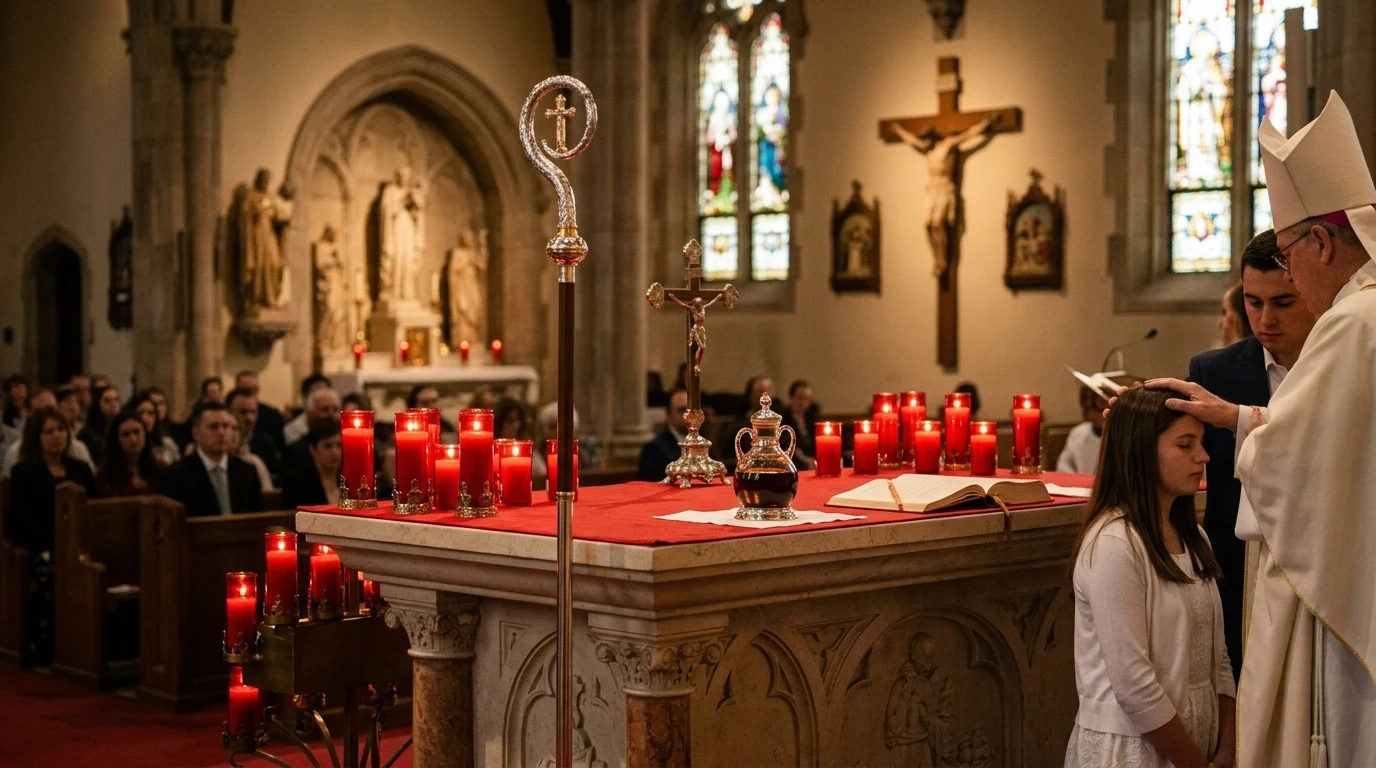
In the Catholic Church, Confirmation is one of the three Sacraments of Christian Initiation that deepens baptismal grace and seals the recipient with the special gift of the Holy Spirit. Administered through the laying on of hands and anointing with Sacred Chrism, it spiritually empowers Catholics to bear mature witness to Christ.
Every year, thousands of Catholic teenagers and adult converts approach the altar to receive the Sacrament of Confirmation. Along with Baptism and the Holy Eucharist, Confirmation forms the golden triad of Christian Initiation. While Baptism washes away sin and initiates the soul into the family of God, Confirmation brings an outpouring of the Holy Spirit analogous to the Apostle’s experience on Pentecost Sunday, equipping the believer with divine fortitude for life’s spiritual battles.
Contents
- The Biblical and Apostolic Foundation of Confirmation
- The Sevenfold Gifts of the Holy Spirit
- The Liturgical Rite: How Confirmation Is Celebrated
- The Essential Roles: Confirmation Name and Sponsor
- Comparison Matrix: The Sacraments of Initiation
- Living Out the Sacrament in the Modern World
- Frequently Asked Questions About Catholic Confirmation
The Biblical and Apostolic Foundation of Confirmation
The Catholic doctrine of Confirmation is rooted firmly in Sacred Scripture and apostolic tradition. Throughout the Old Testament, the prophets foretold an era when God’s Spirit would rest abundantly upon the Messiah and His people (Isaiah 11:2, Ezekiel 36:26-27). Jesus fulfilled these prophecies and explicitly promised His disciples that He would not leave them orphans, but would send the Paraclete—the Holy Spirit, the Spirit of Truth (John 14:16-17, 26).
On the morning of Pentecost (Acts 2:1-4), the Holy Spirit descended with the roar of a driving wind and tongues of fire, transforming timid disciples into fearless evangelists. In the Acts of the Apostles, the early Church clearly distinguished between the initial washing of water and the subsequent imparting of the Spirit through apostolic hands:
“Now when the apostles at Jerusalem heard that Samaria had received the word of God, they sent to them Peter and John, who came down and prayed for them that they might receive the Holy Spirit; for it had not yet fallen upon any of them, but they had only been baptized in the name of the Lord Jesus. Then they laid their hands on them and they received the Holy Spirit.” — Acts 8:14–17
The Sevenfold Gifts of the Holy Spirit
In Catholic teaching, Confirmation does not impart brand-new divine graces disconnected from Baptism; rather, it activates, enriches, and solidifies the theological virtues and infuses the soul with the Seven Gifts of the Holy Spirit, as enumerated in Isaiah 11:1–3:
- Wisdom (Sapientia): The capacity to judge and direct human affairs according to divine truth, seeing life through the perspective of God.
- Understanding (Intellectus): A penetrating insight into the profound mysteries of the Catholic faith and Sacred Scripture.
- Counsel (Consilium): Intuitive spiritual prudence that directs moral conscience in moments of ethical ambiguity, inspiring right action.
- Fortitude (Fortitudo): Divine courage and steadfastness to profess the Catholic faith openly, endure trials, and reject worldly compromise.
- Knowledge (Scientia): The ability to discern the divine worth of created things and avoid being seduced by ephemeral earthly attachments.
- Piety (Pietas): A tender filial affection toward God our Heavenly Father and a joyful reverence for sacred liturgy and fellow human beings.
- Fear of the Lord (Timor Domini): Not servile dread, but profound awe, respect, and reverence before the sovereign majesty and holiness of Almighty God.
The Liturgical Rite: How Confirmation Is Celebrated
The celebration of Confirmation is rich in visual and sacramental symbolism. When celebrated within Holy Mass by the Bishop (the ordinary minister), the liturgy unfolds through distinct sacramental stages:
1. Renewal of Baptismal Promises
Before receiving the sacrament, the candidates stand and publicly renounce Satan, all his works, and all his empty promises, while professing faith in the Holy Trinity and the Holy Catholic Church. This deliberate act bridges Baptism and Confirmation, affirming that what was promised by parents and godparents in infancy is now personally ratified by the candidate.
2. The Laying on of Hands
The Bishop and concelebrating priests extend their hands over all candidates together. This ancient biblical gesture signifies the invoking of the Holy Spirit, begging God to pour out His sevenfold gifts upon the souls of the candidates.
3. The Anointing with Sacred Chrism
The candidate approaches the Bishop accompanied by their Confirmation sponsor, who rests a supportive hand upon the candidate’s right shoulder. The Bishop dips his thumb into consecrated Sacred Chrism (a fragrant mixture of pure olive oil and balsam consecrated on Holy Thursday) and traces the Sign of the Cross on the candidate’s forehead, saying:
“[Confirmation Name], be sealed with the Gift of the Holy Spirit.”
The newly confirmed responds: “Amen.” The Bishop then offers the Sign of Peace: “Peace be with you,” to which the confirmed replies: “And with your spirit.”
The Essential Roles: Confirmation Name and Sponsor
Two meaningful traditions accompany preparation for Catholic Confirmation:
- The Confirmation Name: Candidates select the name of a canonized Catholic saint whose virtuous life, courage, or intercession they admire. This saint becomes a lifelong heavenly patron, role model, and spiritual advocate.
- The Confirmation Sponsor: A practicing, fully initiated Catholic (having received Baptism, Confirmation, and Holy Eucharist) who leads a life of faith. The sponsor pledges to guide, mentor, and pray for the confirmed throughout their adult spiritual journey.
Comparison Matrix: The Sacraments of Initiation
The following comparative overview clarifies how Confirmation harmonizes with Baptism and the Holy Eucharist in the Catholic sacramental economy:
| Sacrament | Primary Spiritual Grace | Sacramental Matter & Form | Primary Minister | Frequency |
|---|---|---|---|---|
| Baptism | Cleansing of Original Sin; rebirth as child of God | Natural water; Trinitarian formula | Priest or Deacon | Once in a lifetime |
| Confirmation | Outpouring of Holy Spirit; spiritual maturity & seal | Sacred Chrism; “Be sealed with the Gift…” | Bishop (or delegated Priest) | Once in a lifetime |
| Holy Eucharist | Intimate communion with Christ; spiritual nourishment | Wheat bread & grape wine; Words of Consecration | Priest or Bishop | Repeatable (daily/weekly) |
Living Out the Sacrament in the Modern World
Confirmation is never a spiritual graduation or farewell to church attendance; on the contrary, it marks the commencement of active Christian discipleship. The indelible spiritual seal (character) imprinted upon the soul empowers Catholics to defend the dignity of human life, serve the marginalized in their communities, cultivate prayerful families, and bring the radiant light of the Gospel into modern secular society.
Frequently Asked Questions About Catholic Confirmation
At what age do Catholics receive Confirmation?
In the Latin Rite of the Catholic Church, Confirmation is typically administered to youth between the ages of 12 and 16 (often in 8th to 10th grade), or to adult converts entering the Church through the Order of Christian Initiation of Adults (OCIA/RCIA). In Eastern Catholic Rites, Confirmation (termed Chrismation) is administered immediately following infant Baptism.
Can you be confirmed more than once in the Catholic Church?
No. Like Baptism and Holy Orders, Confirmation imprints an indelible spiritual character on the soul and therefore can never be repeated.
What are the qualifications to be a Catholic Confirmation sponsor?
A sponsor must be at least 16 years of age, a fully initiated Catholic who has received Baptism, Confirmation, and Holy Communion, and someone leading a life of faith consistent with the teachings of the Catholic Church.
Get our latest guides, news, and insights highlighted in your Google Search & AI Overviews.


 URGENT: PAGE CLOSING SOON!