
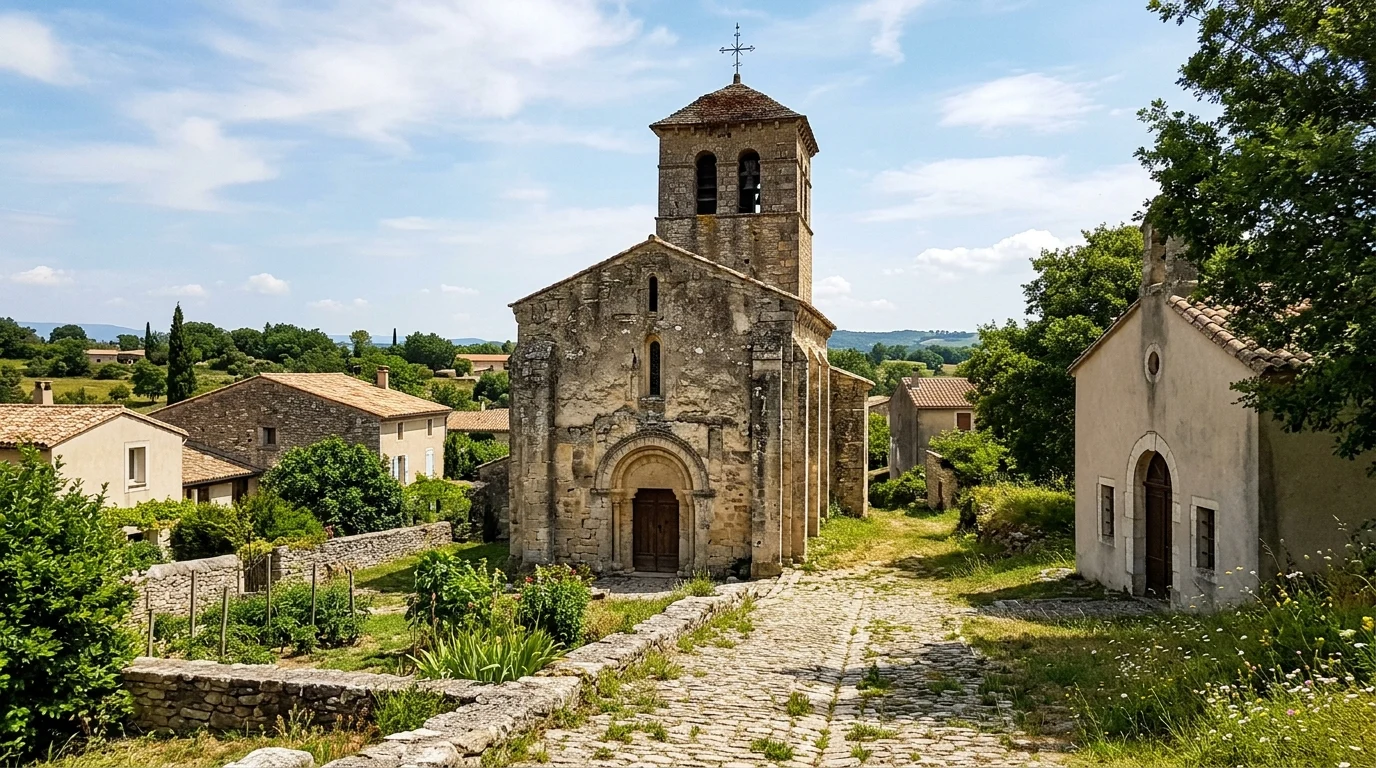
Exploring Saint-Uze in Drôme: Sacred Heritage, Ancient Chapels, and Local Faith
✨ This article was AI edited. Editorial responsibility: Saint Jerome Church.
Produced with AI. This article was artificially generated. Editorial responsibility: Saint Jerome Church.
Saint-Uze is a historic commune in the Drôme department of southeastern France renowned for its medieval Catholic origins, artisanal stoneware ceramics, and sacred rural heritage. Nestled in the Auvergne-Rhône-Alpes region, Saint-Uze preserves centuries of Roman Catholic pilgrimage routes, parish chapels, and pastoral faith traditions dating back to early Christian missionary settlement.
Located in the rolling hills of the northern Drôme, often referred to as Drôme des Collines, the picturesque village of Saint-Uze represents a fascinating intersection of French spiritual history and rural industrial artistry. While modern visitors often associate the town with its famed salt-glazed stoneware pottery, the true foundation of Saint-Uze lies in centuries of devout Catholic communal life, parish architecture, and medieval monastic influence that helped civilize the region during turbulent feudal eras.
Contents
- Historical Roots: The Sacred Patronage and Early Settlement
- The Romanesque Heritage: The Parish Church and Rural Chapels
- The Sacred Connection Between Clay, Craft, and Monastic Devotion
- Chronology of Faith and Heritage in Saint-Uze (Drôme)
- Spiritual Tourism and Sacred Reflection in Modern Saint-Uze
- Frequently Asked Questions About Saint-Uze (Drôme)
Historical Roots: The Sacred Patronage and Early Settlement
The origins of Saint-Uze date back to early medieval Gaul. The commune derives its distinctive name from Saint Eusebius (Saint Uze or Saint Eustochius in local regional dialects), an early Christian confessor and bishop venerated across the Dauphiné region. During the Merovingian and Carolingian periods, early Christian evangelists traveled along the Galaure and Rhône valleys, establishing rustic oratories and monastic hermitages that sheltered travelers and provided spiritual solace to agrarian peasantry.
By the 11th and 12th centuries, the parish of Saint-Uze was incorporated into the religious jurisdiction of the Diocese of Vienne, a prominent metropolitan see of early Christendom. Monks from nearby Cluniac and Benedictine foundations drained marshlands, cleared wooded hillsides, and erected stone chapels that anchored the daily rhythms of liturgical hours, agricultural tithes, and seasonal feast day processions.
The Romanesque Heritage: The Parish Church and Rural Chapels
The spiritual heart of Saint-Uze is centered upon its historic parish church, an enduring testament to Dauphinois Romanesque architecture. Built from locally quarried molasse and limestone, the structure features classic Romanesque hallmarks:
- Semicircular Arches and Vaults: Sturdy stone masonry designed to withstand centuries of weathering while creating natural acoustic resonance for Gregorian chant.
- The Bell Tower (Clocher): A square bell tower that historically governed daily life across the valley, ringing the Angelus at dawn, midday, and twilight, and sounding the tocsin during storms or regional conflicts.
- Sacred Iconography: Modest yet evocative carved stone capitals depicting Christian motifs, including the Good Shepherd, stylized vine leaves evoking Eucharistic imagery, and traditional patronal saints of the Drôme.
Beyond the village center, ancient wayside shrines (oratoires) and stone crosses dot the rural lanes leading toward the neighboring hamlets of Saint-Barthélemy-de-Vals and Laveyron. These markers served as devotional waypoints for local farmers and pilgrims walking historic branch routes of the Camino de Santiago (Way of Saint James) heading toward Le Puy-en-Velay.
The Sacred Connection Between Clay, Craft, and Monastic Devotion
One of the most remarkable aspects of Saint-Uze’s legacy is the symbiotic relationship between its geological landscape and Catholic monastic craftsmanship. The local soil is exceptionally rich in kaolin and refractory clay, materials discovered to be ideal for creating non-porous, fire-resistant ceramic vessels.
Initially nurtured by monastic apothecaries who required inert, durable jars to preserve medicinal herbs, balms, and liturgical oils, the potters of Saint-Uze perfected stoneware pottery in the 18th and 19th centuries. Known as grès de Saint-Uze, these iconic ceramic vessels—frequently adorned with cobalt-blue floral motifs—were prized throughout France for their durability. The discipline of the craft echoed the monastic motto Ora et Labora (Pray and Work), demonstrating how sacred duty and honest manual labor sanctified ordinary village life.
Chronology of Faith and Heritage in Saint-Uze (Drôme)
The following historical overview contextualizes major milestones in Saint-Uze’s religious and cultural development:
| Era | Historical Milestone | Spiritual & Religious Significance |
|---|---|---|
| 6th–8th Century | Early Christian Hermitages along Galaure River | Introduction of the veneration of Saint Eusebius (Saint-Uze) |
| 11th–12th Century | Construction of Romanesque parish stone chapel | Integration into the ecclesiastical Diocese of Vienne |
| 14th–15th Century | Establishment of rural confraternities and patron feasts | Communal solidarity through Catholic charitable brotherhoods |
| 16th Century | French Wars of Religion in Dauphiné region | Preservation of Catholic parish identity amidst regional conflict |
| 18th–19th Century | Flourishing of Saint-Uze stoneware ceramic industry | Production of vessels for church monasteries, hospitals, and homes |
| Modern Era | Heritage preservation and ceramic museum exhibitions | Pilgrimage waypoints and cultural preservation of Drôme sacred arts |
Spiritual Tourism and Sacred Reflection in Modern Saint-Uze
Today, visitors exploring the Drôme valley discover in Saint-Uze an oasis of quiet contemplation. The peaceful harmony of stone buildings, verdant hillsides, and ancient church bells provides a natural respite from the frenetic pace of modern life. For Catholic pilgrims and cultural travelers alike, Saint-Uze serves as a living reminder of the resilience of parochial faith in provincial France—a testament to generations who tilled the earth, sculpted the clay, and raised their prayers to heaven.
Frequently Asked Questions About Saint-Uze (Drôme)
Where is Saint-Uze located?
Saint-Uze is a picturesque rural commune situated in the Drôme department in the Auvergne-Rhône-Alpes region of southeastern France, approximately 30 kilometers north of Valence in the Drôme des Collines area.
What is Saint-Uze famous for?
Saint-Uze is celebrated throughout France for its historic stoneware ceramics (céramique de Saint-Uze), its medieval Romanesque parish church, and its rich historical connection to Christian monastic traditions in the Dauphiné region.
Which Catholic diocese oversees Saint-Uze?
Saint-Uze is part of the Roman Catholic Diocese of Valence (Diocèse de Valence, Die et Saint-Paul-Trois-Châteaux), which traces its apostolic history back to the early martyrs and evangelizers of ancient Gaul.
Get our latest guides, news, and insights highlighted in your Google Search & AI Overviews.

 URGENT: PAGE CLOSING SOON!