
Sacrament Definition Simple: Complete Catholic Guide in Plain Words
✨ This article was AI edited. Editorial responsibility: Saint Jerome Church.
Produced with AI. This article was artificially generated. Editorial responsibility: Saint Jerome Church.
In simple terms, a sacrament is a visible, sacred sign instituted by Jesus Christ to deliver invisible Godly grace into our daily lives. In the Catholic Church, there are seven sacred sacraments that bless, heal, forgive, and guide believers through every major turning point from birth to eternal life.
Religion and theology can sometimes seem full of complicated vocabulary and abstract philosophical doctrines. However, the foundational heart of the Christian faith was intended to be understood by ordinary people—children, parents, workers, and elders alike. When someone asks for a sacrament definition simple enough for anyone to grasp, the answer begins with how God uses everyday physical things to show us His infinite love.
Contents
- What Is a Sacrament? A Clear and Simple Explanation
- The 3 Key Ingredients of Every Sacrament
- The 7 Sacraments Explained in Plain Language
- 1. Baptism: Becoming a Child of God
- 2. Confirmation: Growing Strong in the Holy Spirit
- 3. Holy Eucharist (Holy Communion): The Food for Our Soul
- 4. Reconciliation (Confession): God’s Loving Forgiveness
- 5. Anointing of the Sick: Comfort in Illness
- 6. Holy Matrimony (Marriage): God’s Blessing on Family
- 7. Holy Orders: Serving as Priests and Deacons
- Simple Reference Table: The 7 Sacraments at a Glance
- Why Did God Give Us Sacraments?
- Frequently Asked Questions About Simple Sacrament Definitions
What Is a Sacrament? A Clear and Simple Explanation
The most famous, classic definition of a sacrament was given centuries ago by Saint Augustine of Hippo. He described a sacrament simply as: “An outward and visible sign of an inward and spiritual grace.”
To understand what this means in everyday life, think of a warm hug or a firm handshake. The hug or handshake is a physical, visible gesture you can see and feel. But what does it communicate? It communicates invisible love, peace, friendship, and welcoming that you feel in your heart. In an even greater and supernatural way, God takes simple elements from creation—pure water, bread, wine, fragrant olive oil, and spoken words of blessing—and uses them to pour His Holy Spirit and grace directly into our souls.
The 3 Key Ingredients of Every Sacrament
Every sacrament in the Catholic Church contains three simple, essential parts:
- The Physical Sign (Matter): Something real that you can touch, see, or taste. For example, the water used in Baptism, the bread and wine at Holy Communion, or the blessed oil used when praying for someone who is sick.
- The Sacred Words (Form): The specific prayer or words of blessing spoken by the priest or bishop. For instance, when water is poured during Baptism, the minister says: “I baptize you in the name of the Father, and of the Son, and of the Holy Spirit.”
- God’s Invisible Gift (Grace): The actual spiritual help, forgiveness, strength, and friendship that God pours into your heart.
The 7 Sacraments Explained in Plain Language
The Catholic Church celebrates seven sacraments, each designed for a specific moment in our journey with God. Here is a simple, easy-to-understand breakdown:
1. Baptism: Becoming a Child of God
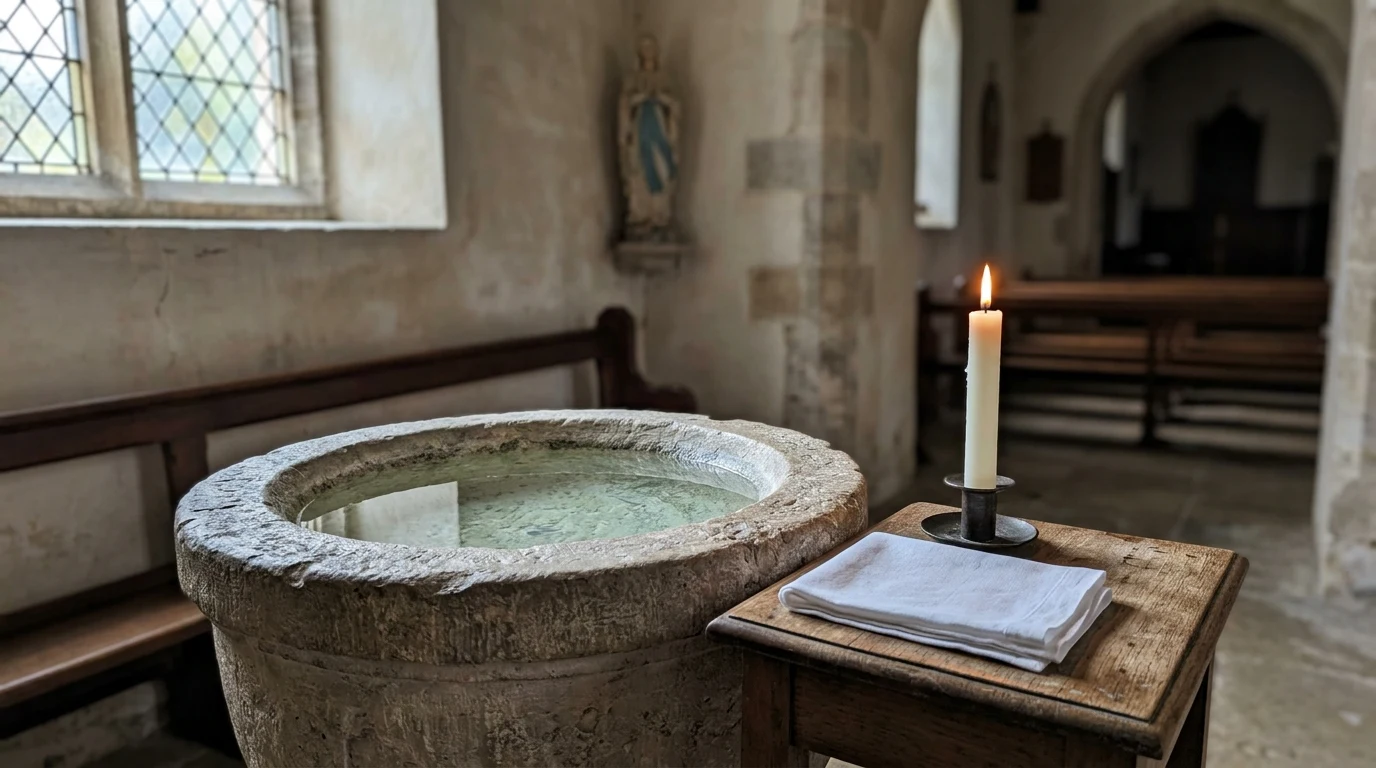
Baptism is the first sacrament and the doorway to Christian life. Pure water is poured over the person’s head, washing away Original Sin and welcoming them as a beloved member of God’s family and the Church.
2. Confirmation: Growing Strong in the Holy Spirit
As young people or adults grow in their faith, Confirmation seals them with the seven gifts of the Holy Spirit (like wisdom, courage, and understanding). Through anointing with blessed oil (Sacred Chrism), it equips them to stand strong and live out their faith bravely in the world.
3. Holy Eucharist (Holy Communion): The Food for Our Soul
At Holy Mass, Catholics receive the consecrated bread and wine, which truly becomes the Body and Blood of Jesus Christ. Just like physical food gives energy to our bodies, the Eucharist feeds and strengthens our souls each week.
4. Reconciliation (Confession): God’s Loving Forgiveness
Everyone makes mistakes and falls into sin. In Reconciliation, you privately speak to a priest, confess your sins with sincere sorrow, and hear the joyful words of absolution: “I absolve you from your sins.” It restores peace of mind and wipes the slate clean.
5. Anointing of the Sick: Comfort in Illness
When someone is facing serious illness, old age, or major surgery, the priest anoints them with holy oil and prays for their healing. This sacrament brings peace, relieves anxiety, and unites the person’s suffering with the love of Christ.
6. Holy Matrimony (Marriage): God’s Blessing on Family
When a man and woman marry in the Church, they make a lifelong sacred promise to love, honor, and support each other through good times and bad. God blesses their union so they can help each other reach heaven and raise children in faith.
7. Holy Orders: Serving as Priests and Deacons
Certain men are called by God to dedicate their entire lives to serving the Church as deacons, priests, or bishops. Through the laying on of hands by a bishop, they receive the spiritual authority to preach the Gospel and celebrate the holy sacraments.
Simple Reference Table: The 7 Sacraments at a Glance
The following table provides a quick, clear reference guide to all seven sacraments:
| Sacrament | What You See (Visible Sign) | What God Gives (Invisible Grace) | How Often Received |
|---|---|---|---|
| Baptism | Pouring of natural water | New life as God’s child; forgiveness of sin | Once in a lifetime |
| Confirmation | Anointing with scented holy oil | Gifts and fortitude of the Holy Spirit | Once in a lifetime |
| Holy Eucharist | Bread and wine consecrated at Mass | Real Presence of Jesus nourishing the soul | Regularly (weekly or daily) |
| Reconciliation | Confession of sins and words of absolution | Divine mercy, forgiveness, and peace of heart | Whenever needed |
| Anointing of the Sick | Anointing forehead and hands with oil | Spiritual peace, strength, and comfort in sickness | During serious illness |
| Holy Matrimony | Exchange of wedding vows and rings | Lifelong grace to love and support each other | Once (lifelong covenant) |
| Holy Orders | Bishop lays hands on the ordained man | Grace to serve as a deacon, priest, or bishop | Once for each order |
Why Did God Give Us Sacraments?
God made human beings with physical bodies, eyes, ears, and touch. Because we are physical beings, God didn’t just write a message in the clouds—He sent His Son, Jesus Christ, in human flesh. In the same way, Jesus created the sacraments so that we could touch, taste, hear, and feel God’s presence in a tangible way. When you feel the water of Baptism or taste the bread of Communion, you know with absolute certainty that God is with you.
Frequently Asked Questions About Simple Sacrament Definitions
What is the shortest definition of a sacrament?
The shortest and most famous definition is: A sacrament is an outward sign instituted by Christ to give grace.
Can anyone receive a sacrament?
Baptism is open to anyone who desires to become a Christian. Once baptized, believers prepare to receive the other sacraments as they grow in faith and understanding.
Are sacraments just symbols?
No. While they use symbols like water and oil, Catholics believe sacraments are efficacious—meaning they actually accomplish what they symbolize through the power of God.
Get our latest guides, news, and insights highlighted in your Google Search & AI Overviews.


 CLASSIFIED INFORMATION ALERT