
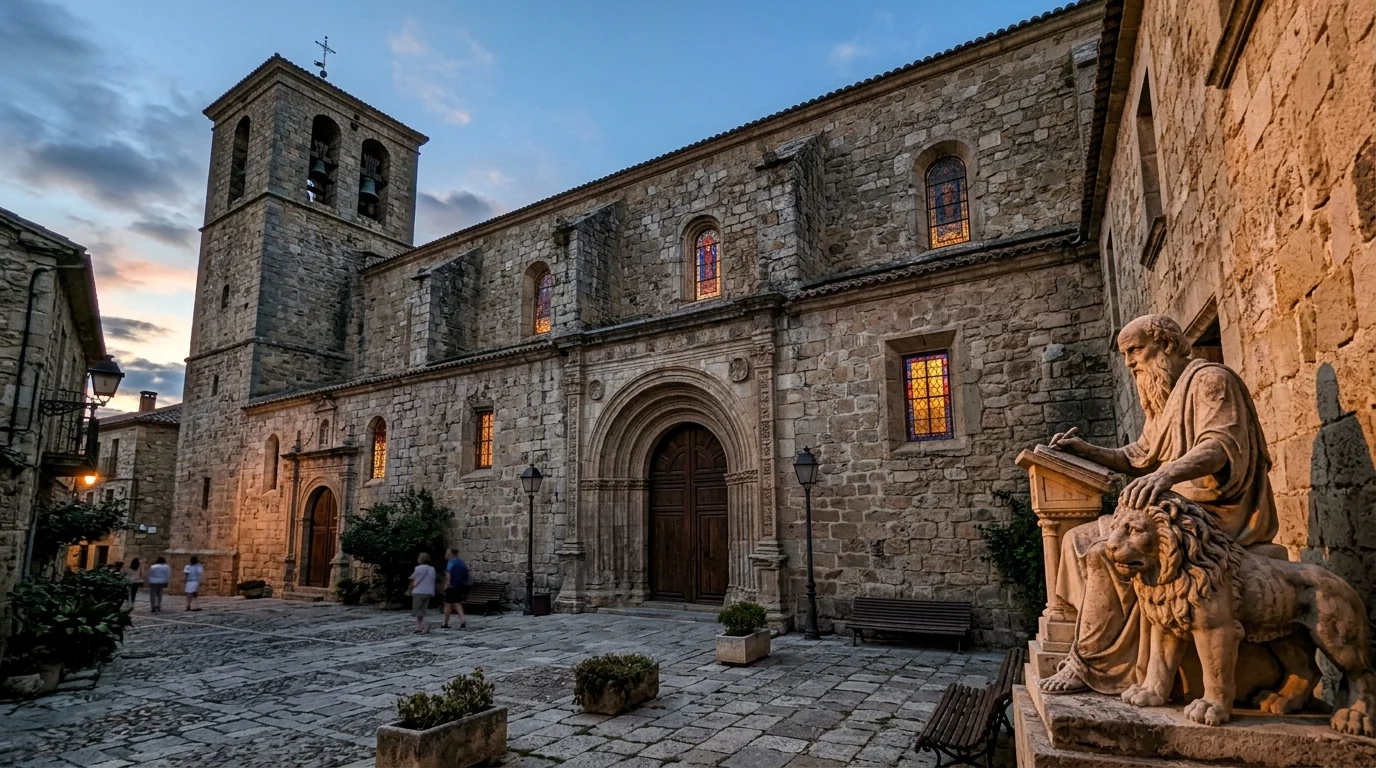
The Church of St. Jerome: Historical Legacy, Sacred Architecture, and Patron Saint
✨ This article was AI edited. Editorial responsibility: Saint Jerome Church.
Produced with AI. This article was artificially generated. Editorial responsibility: Saint Jerome Church.
The Church of St. Jerome refers to prominent Catholic parish churches and sanctuaries worldwide dedicated to Saint Jerome (c. 347–420 AD), the renowned Doctor of the Church who translated the Bible into the Latin Vulgate. These sacred spaces embody centuries of intellectual rigor, ascetic devotion, and Romanesque to Baroque architectural heritage celebrating the Word of God.
Throughout Christendom, churches bearing the patronage of Saint Jerome stand as monumental testaments to the profound connection between scholarly discipline and burning personal love for Jesus Christ. Saint Jerome—celebrated alongside Saints Augustine, Ambrose, and Gregory the Great as one of the four original Latin Doctors of the Church—dedicated his extraordinary intellect to translating the Hebrew and Greek Scriptures into Latin, giving the Western Church its definitive biblical text for over a millennium.
Contents
- Who Was Saint Jerome? Scholar, Hermit, and Doctor of Scripture
- Notable Historic Churches of Saint Jerome Worldwide
- Sacred Iconography: Decoding the Symbols of Saint Jerome
- Comparative Overview: Landmark Sanctuaries of Saint Jerome
- The Living Faith of Saint Jerome Parishes Today
- Frequently Asked Questions About Churches of Saint Jerome
Who Was Saint Jerome? Scholar, Hermit, and Doctor of Scripture
Born Eusebius Sophronius Hieronymus around 347 AD in Stridon (near modern-day Croatia and Slovenia), Jerome received a masterly education in classical rhetoric, philosophy, and Latin literature in Rome. While in Rome, he was baptized into the Christian faith. However, worldly ambitions soon gave way to an intense desire for monastic solitude and total dedication to Christ.
Jerome retreated into the harsh desert of Chalcis in Syria, living as an ascetic hermit. There, to combat temptations and discipline his fierce temperament, he began the arduous study of the Hebrew language under the guidance of a Jewish convert. Later summoned to Rome by Pope Damasus I, Jerome was commissioned to produce a revised, unified Latin translation of the Holy Scriptures. Moving to Bethlehem, he established a monastery near the Cave of the Nativity, laboring for over thirty years until his death in 420 AD to complete the historic Latin Vulgate.
Notable Historic Churches of Saint Jerome Worldwide
Parish churches, basilicas, and historic chapels dedicated to Saint Jerome reflect diverse architectural styles and deep spiritual traditions across multiple continents:
1. San Girolamo dei Croati (Rome, Italy)
Serving as the national Catholic church of Croatia in Rome, this magnificent late-Renaissance and Baroque church near the Tiber River was granted by Pope Nicholas V in 1453 to refugees fleeing the Ottoman conquest of the Balkans. Rebuilt under Pope Sixtus V in 1589, it features ornate marble side chapels and frescoes depicting Jerome’s life and scholarly labors.
2. San Jerónimo el Real (Madrid, Spain)
Affectionately known as “Los Jerónimos,” this majestic 16th-century Gothic-Isabelline monastery and church served for centuries as the royal parish of the Spanish Monarchy. It was the historical site for the swearing-in ceremonies of the Princes of Asturias and remains a sacred landmark of Spanish Catholic history.
3. Saint Jerome Church Parishes across North America
In the United States and Canada, numerous parish churches founded in the 19th and 20th centuries chose Saint Jerome as their celestial patron to inspire Catholic immigrants with reverence for biblical literacy, parish education, and devotion to the Eucharistic liturgy.
Sacred Iconography: Decoding the Symbols of Saint Jerome
In Christian art and architectural sculpture adorning churches of Saint Jerome, four primary iconographic symbols frequently identify the saint:
- The Friendly Lion: Medieval legend recounts that a limping lion entered Jerome’s Bethlehem monastery. While other monks fled, Jerome calmly examined its paw, extracted a painful thorn, and tended the wound. The devoted lion remained by his side as a companion, symbolizing the triumph of Christian charity over brute nature.
- The Cardinal’s Red Hat and Robes: Although the formal College of Cardinals developed centuries after his death, classical artists consistently depicted Jerome in cardinal’s vestments in honor of his historical role as chief secretary to Pope Damasus I.
- The Skull and Stone: In desert hermit paintings, Jerome is often shown kneeling before a crucifix, holding a skull (a memento mori reminding the soul of mortality and eternity) and striking his chest with a stone in penance.
- The Quill, Inkhorn, and Open Bible: The defining emblem of his intellectual vocation as the translator of the Holy Scriptures, illustrating divine inspiration guiding human scholarship.
Comparative Overview: Landmark Sanctuaries of Saint Jerome
The following table highlights the architectural, historical, and devotional attributes of renowned churches dedicated to Saint Jerome:
| Sanctuary Name | Location | Architectural Style | Historical Heritage Focus |
|---|---|---|---|
| San Girolamo dei Croati | Rome, Italy | Late Renaissance / Baroque | National church of the Croatian community; papal foundation |
| San Jerónimo el Real | Madrid, Spain | Isabelline Gothic / Neo-Gothic | Royal convent and coronations; monastery of the Order of St. Jerome |
| Cave of Saint Jerome | Bethlehem, Holy Land | Early Christian Subterranean Grotto | Authentic study and tomb where the Latin Vulgate was translated |
| Saint Jerome Parish | North American Parishes | Romanesque Revival / Gothic Revival | Parish schools, sacramental life, and local community outreach |
The Living Faith of Saint Jerome Parishes Today
Churches named in honor of Saint Jerome today inherit a distinct spiritual charism. They are called to be beacons of authentic Catholic education, nurturing strong Bible study ministries, fostering Eucharistic adoration, and inspiring parishioners to live out their baptismal calling with courage and intellectual fidelity.
Entering a Church of Saint Jerome reminds the faithful that faith and intellect are not enemies, but wings on which the human spirit ascends to the contemplation of truth. As parishioners pray before the altar, they join a communion of saints stretching back to Bethlehem’s quiet caves, where a humble scholar poured out his life so the world might hear the living Word of God.
Frequently Asked Questions About Churches of Saint Jerome
When is the feast day of Saint Jerome celebrated?
The universal Catholic Church celebrates the feast day of Saint Jerome on September 30th, commemorating the date of his death in Bethlehem in 420 AD.
What is Saint Jerome the patron saint of?
Saint Jerome is the patron saint of biblical scholars, translators, librarians, students, and archaeologists, due to his lifelong translation and preservation of Sacred Scripture.
Where was Saint Jerome buried?
Saint Jerome was originally buried beneath the Church of the Nativity in Bethlehem in his subterranean grotto. During later centuries, his holy relics were translated to Rome, where they now rest in the Basilica of Saint Mary Major (Santa Maria Maggiore).
Get our latest guides, news, and insights highlighted in your Google Search & AI Overviews.


 CLASSIFIED INFORMATION ALERT