
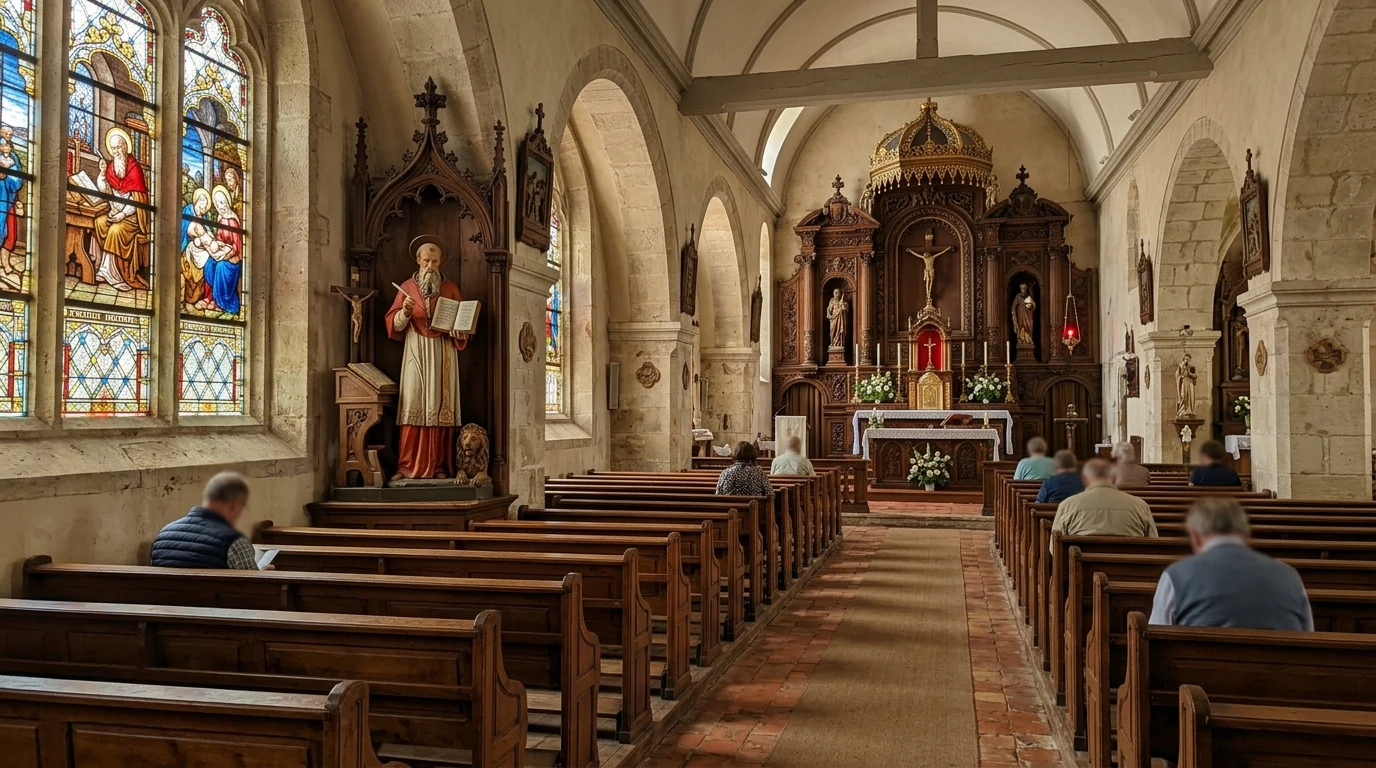
Saint Jerome Catholic Church — History, Parish Life and Patron Saint
✨ This article was AI edited. Editorial responsibility: Saint Jerome Church.
Produced with AI. This article was artificially generated. Editorial responsibility: Saint Jerome Church.
Saint Jerome’s Catholic Church refers to a Catholic parish community placed under the patronal protection of Saint Jerome (c. 347–420 AD), Doctor of the Church and translator of the Latin Vulgate Bible. Parishes bearing this name celebrate Catholic sacramental worship, biblical catechesis, and charitable community outreach inspired by St. Jerome’s foundational conviction that “ignorance of Scripture is ignorance of Christ.”
Throughout Catholic Christendom, churches dedicated to Saint Jerome serve as focal points for liturgical devotion, scholarly reverence for Sacred Scripture, and active parish fellowship. Whether located in historical urban centers or growing suburban dioceses, Saint Jerome Catholic Church communities maintain an unbroken connection to the early Church Fathers and the apostolic tradition.
Contents
- Who Was Saint Jerome? Patron Saint of Biblical Scholars and Translators
- Key Entity Specifications & Patronal Profile
- Sacred Iconography and Church Architecture
- The Sacramental and Liturgical Life of Saint Jerome Parish
- Ministries, Catechesis, and Parish Community
- Frequently Asked Questions About Saint Jerome’s Catholic Church
Who Was Saint Jerome? Patron Saint of Biblical Scholars and Translators
Saint Jerome (Latin: Eusebius Sophronius Hieronymus) was born around 347 AD in Stridon, a Roman town in modern-day Croatia or Slovenia. Endowed with profound intellectual gifts and an exceptional mastery of classical Latin and Greek, Jerome traveled to Rome to study rhetoric, philosophy, and classical literature before undergoing Christian baptism in his late teens.
Drawn to intense asceticism, Jerome spent years in the Syrian desert of Chalcis as a hermit, learning the Hebrew language to master the original texts of the Old Testament. In 382 AD, Pope Damasus I appointed Jerome as his personal secretary and commissioned him with a monumental task: producing an authoritative, uniform Latin translation of the entire Holy Bible from the original Hebrew, Aramaic, and Greek manuscripts.
Jerome relocated to Bethlehem, establishing a monastery near the Grotto of the Nativity. Working tirelessly in his study cave for over three decades, he completed the Latin Vulgate (from editio vulgata, the “common edition”), which remained the definitive biblical text of the Western Catholic Church for over fifteen hundred years and was officially declared the authentic Latin text by the Council of Trent in 1546.
Key Entity Specifications & Patronal Profile
The following structured reference details the historical, theological, and patronal attributes of Saint Jerome celebrated in Catholic parishes worldwide:
| Entity Attribute | Historical & Theological Specification |
|---|---|
| Full Latin Name | Eusebius Sophronius Hieronymus |
| Lifespan | c. 347 AD (Stridon) – September 30, 420 AD (Bethlehem) |
| Church Title | Doctor of the Church (One of the Four Original Latin Doctors) |
| Liturgical Feast Day | September 30 (Memorial in the General Roman Calendar) |
| Patronage | Translators, Librarians, Biblical Scholars, Archaeologists, Students |
| Iconographical Symbols | Lion with thorn in paw, Quill and scroll, Open Bible, Cardinal’s hat, Skull (memento mori) |
| Principal Magnum Opus | The Latin Vulgate (Biblia Sacra Vulgata) |
Sacred Iconography and Church Architecture
Churches dedicated to Saint Jerome frequently incorporate distinct iconographic motifs within their stained glass, sanctuaries, and architectural woodwork that narrate the saint’s asceticism and scholarly output:
- The Tamed Lion: According to ancient medieval tradition recounted in the Golden Legend, a limping lion entered Jerome’s Bethlehem monastery. While other monks fled, Jerome examined the beast’s paw, removed a large thorn, and washed the wound. The grateful lion became Jerome’s faithful companion, symbolizing divine harmony between nature and saintly virtue.
- The Cardinal’s Red Galero: Although the formal College of Cardinals developed centuries after Jerome’s death, artistic tradition depicts him in cardinalatial red vestments or with a red galero hat nearby, reflecting his historic role as top advisor and secretary to Pope Damasus I.
- The Skull and Stone: In artistic depictions of Jerome’s desert penance, he is often shown striking his chest with a stone before a crucifix with a human skull on his desk—a powerful symbol of ascetic mortification and contemplation of mortality (memento mori).
- The Open Scripture and Quill: As the patron of biblical studies, statues of Saint Jerome in parish sanctuaries consistently depict him holding an open scroll or manuscript alongside a writing quill.
The Sacramental and Liturgical Life of Saint Jerome Parish
At Saint Jerome’s Catholic Church, daily and Sunday parish life revolves around the celebration of the Holy Sacrifice of the Mass. As the source and summit of Christian life (Lumen Gentium, 11), the Eucharist unites the faithful across all generations.
Weekly Liturgical Schedule and Sacraments
Parishioners participate in a full spectrum of Catholic sacramental life, including:
- Holy Mass: Sunday Masses celebrated with sacred music, Scripture readings from the Old and New Testaments, and the Eucharistic liturgy. Daily Mass offered during weekdays for ongoing spiritual nourishment.
- Sacrament of Reconciliation (Confession): Regular weekly confession times providing absolution, grace, and spiritual counsel for the faithful.
- Eucharistic Adoration: Dedicated holy hours before the Blessed Sacrament exposed in the monstrance, fostering quiet contemplative prayer.
- Christian Initiation (Baptism & OCIA): Welcoming infants into the Body of Christ and guiding adult catechumens through the Order of Christian Initiation of Adults.
- Sacramental Preparation: Robust catechetical programs preparing parish youth for First Reconciliation, First Holy Communion, and Confirmation.
Ministries, Catechesis, and Parish Community
Living out Saint Jerome’s love for Sacred Scripture, parish communities foster extensive faith formation ministries. Parish Bible studies, Scripture reflection groups, and religious education classes provide systematic instruction in the Catechism of the Catholic Church and biblical exegesis.
Beyond the classroom, Saint Jerome parishes maintain vibrant pastoral outreach programs, including the St. Vincent de Paul Society for local poverty alleviation, Knights of Columbus councils supporting parish initiatives, altar server guilds, bereavement support groups, and youth ministries that form the next generation of Catholic leaders.
Frequently Asked Questions About Saint Jerome’s Catholic Church
Who was Saint Jerome and why is he revered in the Catholic Church?
Saint Jerome (c. 347–420 AD) was an early Christian priest, monk, and theologian celebrated as one of the greatest biblical scholars in history. He translated the Holy Bible into Latin (the Vulgate) and was declared a Doctor of the Church.
When is the feast day of Saint Jerome celebrated?
The Catholic Church celebrates the feast day of Saint Jerome on September 30th as an obligatory memorial in the General Roman Calendar.
What does Saint Jerome hold in church statues and stained glass?
Saint Jerome is commonly depicted holding an open Bible or manuscript and a quill, often accompanied by a tamed lion, a cardinal’s hat, or a crucifix.
What is Saint Jerome’s famous quote regarding the Bible?
Saint Jerome famously wrote in his commentary on Isaiah: “Ignorance of Scripture is ignorance of Christ” (Ignoratio Scripturarum ignoratio Christi est), emphasizing the essential need for all Christians to study and pray with the Bible.
Get our latest guides, news, and insights highlighted in your Google Search & AI Overviews.


 URGENT: PAGE CLOSING SOON!