
What’s the Level Under Saint? (The Vatican’s 4 Hidden Ranks Explained)

If you are wondering whats the level under saint, the direct answer is “Blessed.”
The Catholic Church grants this title during a solemn ceremony called beatification.
But reaching this stage is not just about living a good life. It requires a grueling investigation by the Vatican that can take centuries.
A single overlooked detail in a candidate’s past can halt the entire process indefinitely. Just one tiny flaw decides if a person becomes a recognized holy figure or remains completely forgotten by history.
What is the shocking piece of evidence that changes everything? We will reveal it below.
The level directly under a Saint in the Catholic Church is Blessed. This title is granted through a process called beatification and requires undeniable proof of a miracle or martyrdom.
Contents
- What Is the Level Directly Under Saint?
- The 4 Ranks of Canonization Explained
- Servant of God and Venerable: The First Steps
- How the Vatican Proves Heroic Virtue and Miracles
- Modern Example: The Journey of Carlo Acutis
- Beatification vs. Canonization: What’s the Difference?
- Summary of the Catholic Promotion Ladder
- Frequently Asked Questions (FAQ)
What Is the Level Directly Under Saint?
The level immediately preceding sainthood is Blessed. Once the Pope officially beatifies an individual, they enter this penultimate tier.
Think of it as a connoisseur’s guide to spiritual ranks, where only the most thoroughly vetted individuals advance.
At this stage, local churches and specific groups can publicly venerate the person.
However, they do not yet receive worldwide devotion. The Vatican restricts global celebration until the final step is complete.
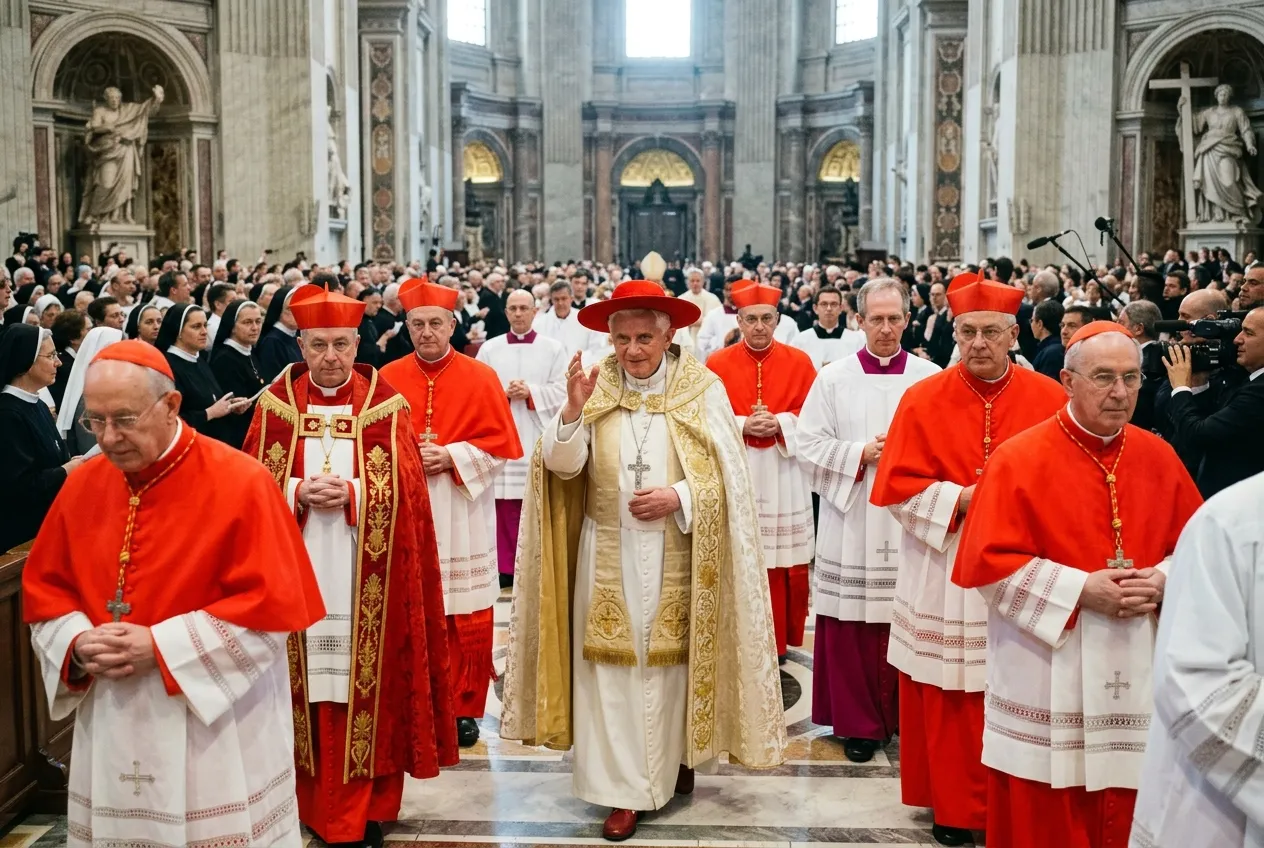
The 4 Ranks of Canonization Explained
The journey to sainthood follows four strict levels. First, a candidate becomes a Servant of God when the initial investigation opens.
Next, the title upgrades to Venerable once their life shows extraordinary devotion.
The third rank is Blessed, which requires proof of divine intervention.
Finally, they achieve full sainthood. This structured Canonization path ensures that no unworthy candidates slip through the cracks.
Servant of God and Venerable: The First Steps
Everything starts at the local level with a Diocesan inquiry. The bishop of the local Diocese collects documents, letters, and witness testimonies about the candidate.
If the findings hold up, the church officially names the person a Servant of God.
Next, theologians compile all this evidence into a massive document called a Positio.
They submit this dossier directly to the Congregation for the Causes of Saints in Rome. If the committee approves the file, the candidate advances to Venerable.
How the Vatican Proves Heroic Virtue and Miracles
To move beyond Venerable, investigators must prove the candidate lived a life of Heroic virtue.
This means they displayed faith and charity far beyond normal expectations, much like the dedication found in ancient monastic traditions of distilling.
The real test, however, relies on Miracles. The church requires one verified miracle attributed to the candidate’s heavenly Intercession after their death.
Medical experts evaluate these events to confirm they have no scientific explanation.
The only exception is Martyrdom. If someone dies for their faith, the church waives the first miracle requirement.
Modern Example: The Journey of Carlo Acutis
Carlo Acutis offers a perfect recent example of this rigorous timeline. This Italian teenager loved computers and built websites to catalog Eucharistic miracles.
After his tragic death from leukemia in 2006, his cause for sainthood opened quickly.
He became Venerable in 2018 and Blessed in 2020 after a young boy in Brazil recovered from a rare illness.
His story fascinates young Catholics today, mirroring the enduring global appeal of Irish heritage and its patron saints. Carlo is now awaiting his final canonization.
Beatification vs. Canonization: What’s the Difference?
Many people confuse Beatification with Canonization. Beatification allows local veneration and grants the title Blessed.
It requires one confirmed miracle (unless the candidate is a martyr).
Canonization, on the other hand, is the ultimate declaration of sainthood. This final stage requires a second verified miracle.
Once canonized, the person is honored by the universal Catholic Church globally.
Summary of the Catholic Promotion Ladder
Understanding the Vatican’s ranking system clears up a lot of historical confusion. The path moves sequentially through Servant of God, Venerable, and Blessed, culminating in official sainthood.
Each step involves intense scrutiny, demanding undeniable proof of holiness and divine intervention. This ensures every canonized figure truly represents the highest spiritual ideals.
Frequently Asked Questions (FAQ)
Is there a level under Saint?
Yes, the level directly under a Saint in the Catholic Church is ‘Blessed’, which is achieved through beatification. Before that, candidates are named ‘Venerable’ and initially a ‘Servant of God’. (Read more about spiritual ranks).
What is the lowest level of sainthood?
The initial step toward sainthood is being named a ‘Servant of God.’ This occurs when a local bishop officially opens a diocesan inquiry into a person’s life and heroic virtue.
Get our latest guides, news, and insights highlighted in your Google Search & AI Overviews.
 ELITE NEUROSCIENCE DISCOVERY