
How to Make Flower Arragment for Chuch Alter with White and Green Flowers for Funeral (Foam-Free Guide)
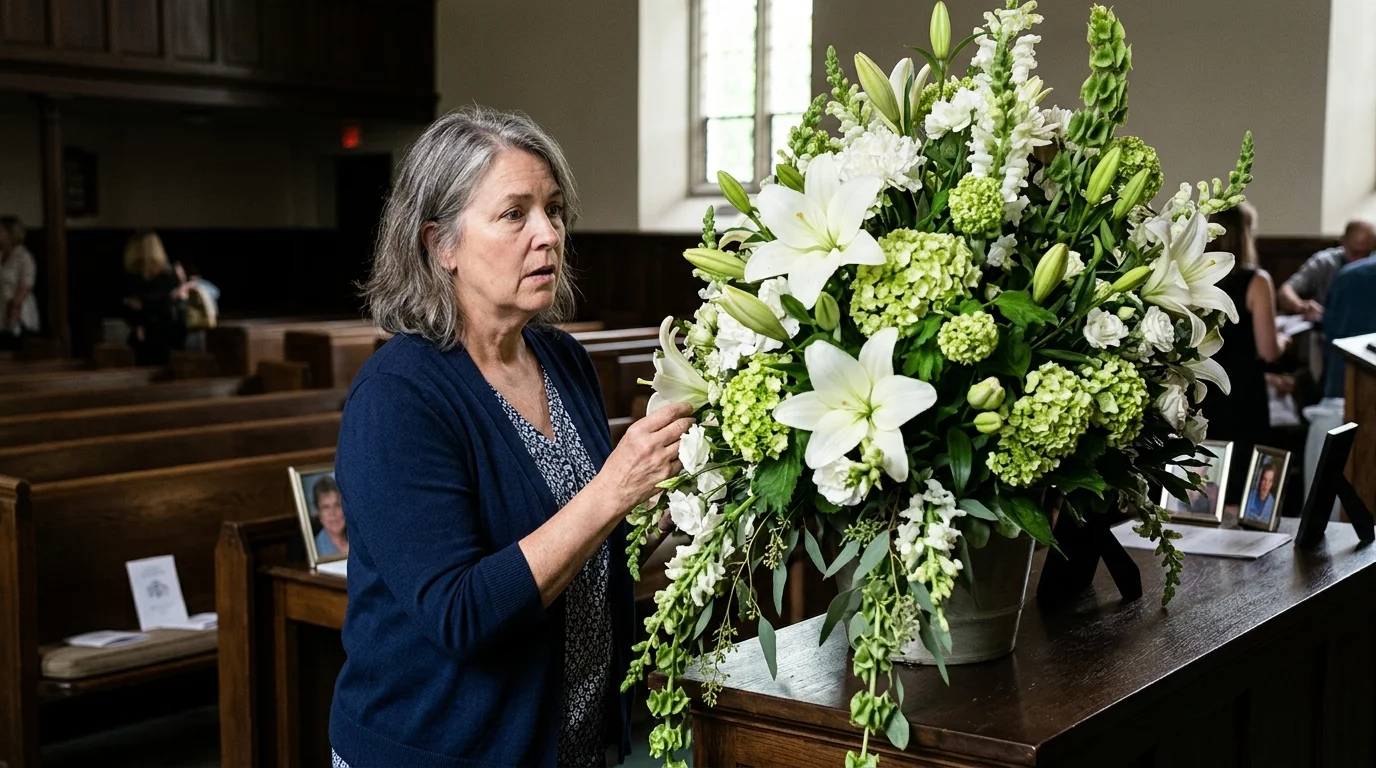
To master how to make flower arragment for chuch alter with white and green flowers for funeral, start simple. Select classic blooms like white lilies and green hydrangeas.
Then, use sustainable mechanics like chicken wire (flexible wire mesh) to build a reverent structure.
Church volunteers and altar guild members often face a daunting task. You must create a dignified tribute honoring a grieving family. Yet, you want to avoid outdated, environmentally harmful floral foam.
The pressure to deliver a beautiful display can feel overwhelming. Fortunately, a modern, foam-free method guarantees stunning results every time. Will your next creation hold up through the entire service, or will the stems wilt before the final blessing?
Contents
- What You Need to Make a White and Green Flower Arrangement for Church Altar for a Funeral
- Understanding Scale, Proportion, and the Symmetrical Triangle
- Foam-Free Mechanics: Using Floral Frogs and Chicken Wire
- Step-by-Step: Creating Your Reverent Funeral Arrangement
- Ensuring Proper Hydration for Long Services
- Liturgical Colors and Choosing the Right Vessels
- Common Mistakes When Designing for the Sanctuary
- Honoring the Liturgy with Sustainable Design
- Frequently Asked Questions
What You Need to Make a White and Green Flower Arrangement for Church Altar for a Funeral
Gathering the right materials is the first step. You need classic white lilies, white roses, and robust green hydrangeas. These establish a floral elegance fitting for a solemn occasion.
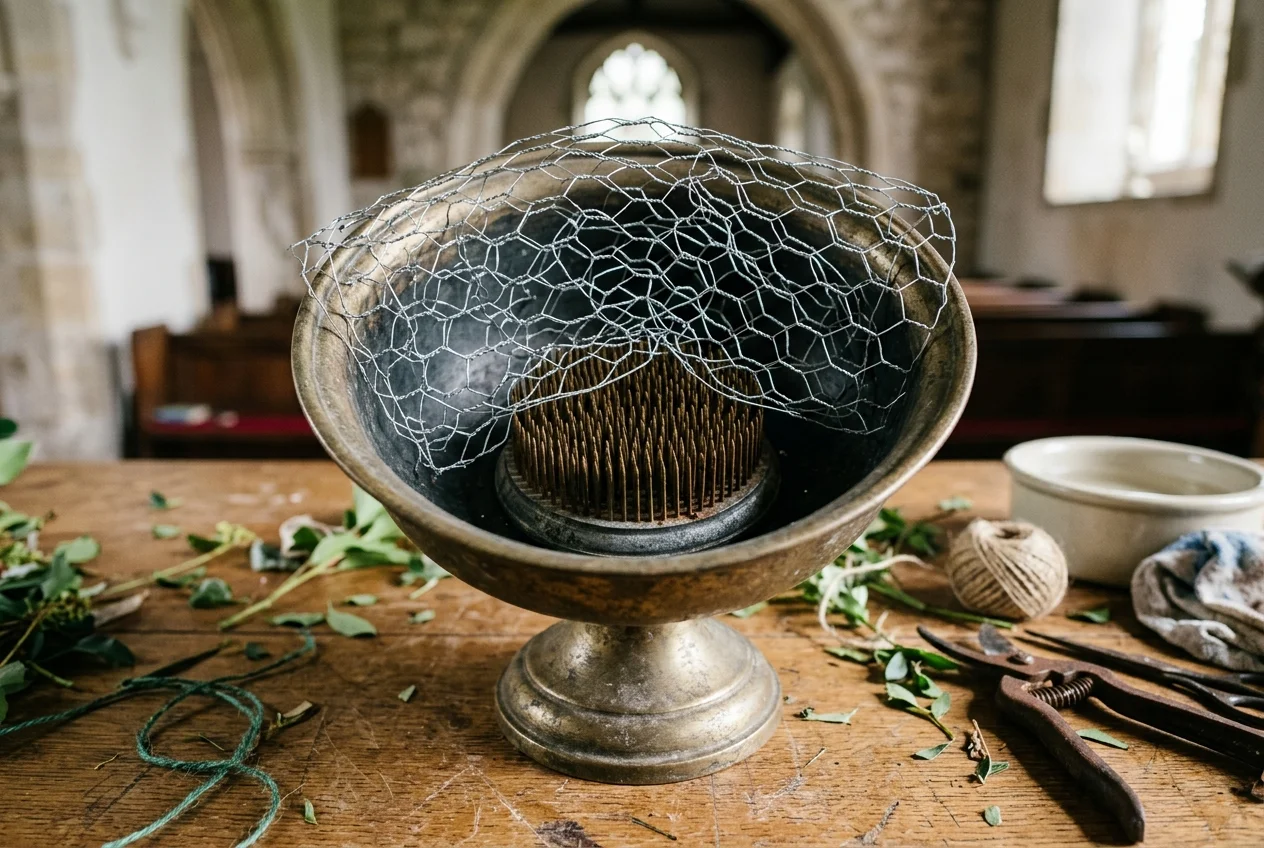
Avoid toxic floral foam. Instead, rely on sustainable tools like chicken wire and floral frogs (heavy metal pin holders). These foam-free mechanics provide a sturdy base inside your vessels while allowing stems to drink naturally.
Essential Blooms
- White lilies
- White roses
- Green hydrangeas
Sustainable Tools
- Chicken wire
- Floral frogs (heavy metal pin holders)
- Appropriate heavy vessels
Understanding Scale, Proportion, and the Symmetrical Triangle
Designing for a sanctuary requires careful attention to scale and proportion. The arrangement must remain visible from the back pews.
Most importantly, it must never obstruct the altar or the ambo (the reading stand).
A proven technique is building a symmetrical triangle (a shape with equal sides). This specific geometry represents the Holy Trinity and creates perfect visual balance.
By shaping the foliage into a triangular outline, beginner florists succeed easily. They achieve a professional, classic silhouette commanding the worship space.
Foam-Free Mechanics: Using Floral Frogs and Chicken Wire
Modern churches now prioritize sustainable practices, often banning floral foam entirely. To adapt, place heavy floral frogs at the bottom of your vessels.
Next, crumple a layer of chicken wire over the frogs and tape it securely.
This grid allows you to insert thick stems easily. Begin by building a foliage skeleton (the foundational greenery structure) with sturdy greens like eucalyptus or myrtle.
This natural framework supports heavy white blooms and keeps the structure stable.
Step-by-Step: Creating Your Reverent Funeral Arrangement
Start by establishing height and width using your tallest greenery. Insert these branches into the chicken wire to form your symmetrical triangle.
Next, add primary white flowers near the center to anchor the visual balance.
Fill in any gaps with green hydrangeas and white roses. Step back frequently to check the shape. Working slowly ensures the final piece looks reverent from every angle in the worship space.
You might recall the intricate designs seen at high-end floral affairs. You can easily adapt those structural techniques for the church.
Ensuring Proper Hydration for Long Services
Funeral services can run long, and flowers must remain pristine. Proper hydration is critical when working with foam-free mechanics.
Fill your vessels to the brim with clean, cool water mixed with floral food.
Because chicken wire allows stems to sit directly in water, blooms drink efficiently. Check the water levels an hour before the liturgy begins. Well-hydrated flowers will stay vibrant throughout the entire service and beyond.
Liturgical Colors and Choosing the Right Vessels
Selecting the proper hues is vital. White and green remain appropriate liturgical colors for funerals. They beautifully symbolize resurrection, peace, and eternal life.
These tones remain suitable across the Liturgical Calendar, whether during Lent or Advent.
Place your arrangements in heavy pedestal containers matching the church architecture. A raised pedestal elevates the flowers perfectly, making them a focal point without interfering with sacred actions at the altar.
Common Mistakes When Designing for the Sanctuary
Many novice florists build arrangements that are too dense or poorly placed. Never block the congregation’s view of the ambo or the altar.
Avoid using strongly scented flowers that might overwhelm the sanctuary. Another common error is neglecting the back of the arrangement. Even if placed against a wall, a flat back ruins the visual balance.
Sometimes, creating floral designs feels like mixing complex tipsy treats. One wrong ingredient throws off the entire balance. Keep your design simple and focused.
Honoring the Liturgy with Sustainable Design
Transitioning to sustainable floristry honors both the environment and the liturgy. By embracing foam-free mechanics, altar guild members create breathtaking, reverent displays respecting creation.
Mastering the symmetrical triangle and proper hydration guarantees success. Your white and green arrangements will beautifully memorialize loved ones.
Frequently Asked Questions
How do you arrange flowers for a church altar without floral foam?
To arrange flowers without floral foam, use sustainable mechanics like floral frogs and chicken wire inside your vessels. This method provides a sturdy foundation for your foliage skeleton while keeping stems properly hydrated during the worship service.
What is the proper scale and proportion for sanctuary flowers?
Altar arrangements must be scaled to the worship space so they are visible to the congregation without obstructing the altar or ambo. A common rule is to create a symmetrical triangle, ensuring visual balance against the church architecture.
Which white and green flowers are best for a funeral?
White lilies, roses, carnations, and chrysanthemums paired with robust greenery like eucalyptus, ferns, and myrtle are ideal. These reverent selections not only fit the appropriate liturgical colors but also offer excellent longevity when properly hydrated.
Why do churches use the symmetrical triangle design?
The symmetrical triangle design represents the Holy Trinity and provides a classic, visually stable structure. This geometry helps beginner florists achieve perfect visual balance, making it a staple for traditional liturgical floral arrangements.
How early should you assemble funeral altar flowers?
It is best to assemble your white and green arrangements the day before the funeral. This allows the blooms time to open fully and ensures the arrangement maintains peak freshness and hydration for the service.
Get our latest guides, news, and insights highlighted in your Google Search & AI Overviews.
 ELITE NEUROSCIENCE DISCOVERY