
Is It Really Blood? The Radical Catholic Belief That Wine Turns Into Blood Explained
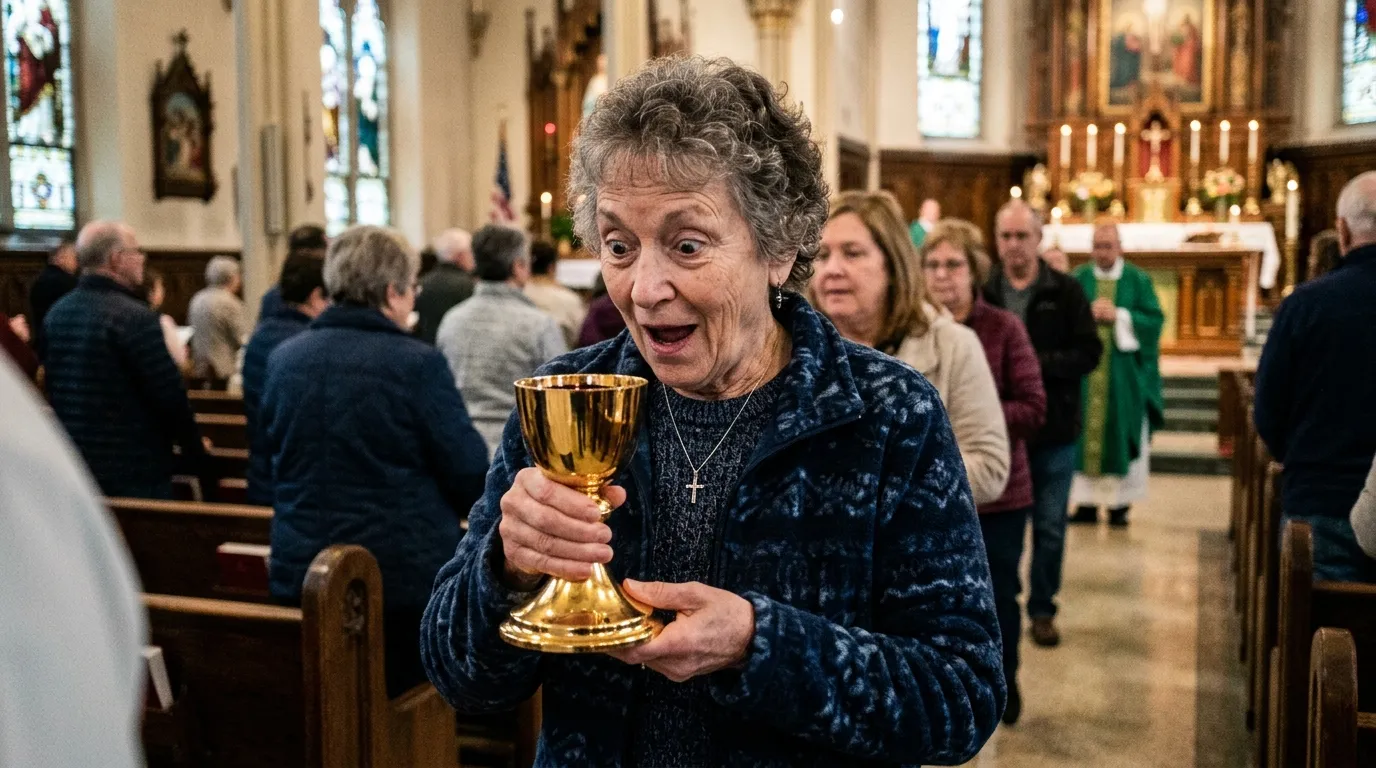
The catholic belief that wine turns into blood is officially known as Transubstantiation.
When you walk into any Catholic Church, you encounter a reality that challenges human logic. You see bread and wine on the altar. You smell the incense.
Yet, behind this ordinary veil hides a mystery that has provoked fierce debate for two millennia.
If you want to understand our core Catholic beliefs, you must confront this radical claim head-on.
A simple historical misunderstanding leads many people to dismiss this teaching entirely. But one crucial detail from ancient Jewish tradition completely changes how you view the chalice.
Contents
- What is Transubstantiation? The Real Presence Explained
- The Biblical Roots: The Last Supper and Bread of Life Discourse
- Substance and Accidents: How the Miracle of the Mass Works
- How to Explain This Catholic Belief to Non-Catholics
- Addressing Common Objections About Holy Communion
- The Ongoing Eucharistic Revival in the Catholic Church
- Summary: The Miracle on the Altar
- FAQ
What is Transubstantiation? The Real Presence Explained
We take Jesus Christ at His exact word. When He spoke, reality shifted to match His commands.
This same divine power operates during the liturgy today. We call this miraculous change Transubstantiation (the complete conversion of one substance into another).
Through this process, the bread and wine cease to exist as ordinary food. They become the Real Presence of our Savior.
This means He is physically and spiritually there. The Real Presence remains the most profound encounter a human being can experience on earth.
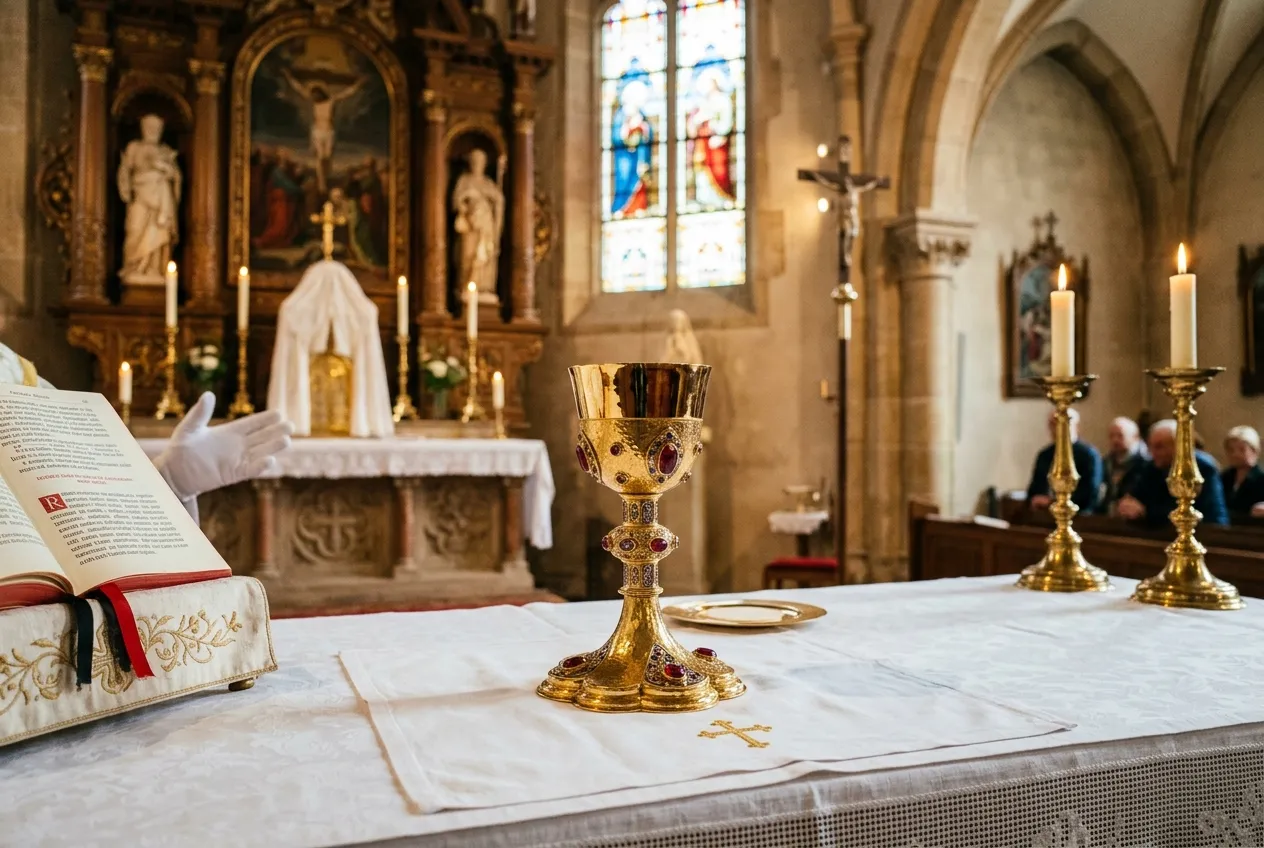
The Biblical Roots: The Last Supper and Bread of Life Discourse
This doctrine does not emerge from medieval invention. We trace the Eucharist (the sacrament of the Lord’s body and blood) directly back to the Last Supper.
Jesus gathered His apostles to celebrate the Jewish Passover. During this sacred meal, He took the cup and stated definitively, “This is my blood.”
He did not call it a symbol. He did not say it represented Him.
Earlier, during the famous Bread of Life Discourse in John 6, He shocked His followers. He commanded them to eat His flesh and drink His blood to gain eternal life.
Many disciples walked away in disgust. Jesus let them leave rather than soften His message.
Substance and Accidents: How the Miracle of the Mass Works
You might ask how bread still tastes like bread if it becomes flesh. St. Thomas Aquinas provided the clearest philosophical explanation for this mystery.
He divided physical reality into two categories: Substance (what a thing fundamentally is) and Accidents (how a thing appears to our senses).
During the Mass, the priest speaks the words of consecration. At that exact moment, the Substance changes completely.
However, the Accidents remain entirely the same. The taste, color, and chemical makeup of the wine endure, but its fundamental reality transforms.
How to Explain This Catholic Belief to Non-Catholics
Sharing this truth requires patience and clear analogies. You can start by asking friends to think about a $100 bill.
Physically, it just looks like paper and ink. But a higher authority guarantees its true, hidden value.
Similarly, the Body and Blood of Christ look like a simple Host (the unleavened bread used in communion). But God’s authority guarantees its divine reality.
Remind your friends that God created the entire universe from nothing. Changing wine into blood requires the exact same divine power.
This helps them understand why we revere the sacrament before we step forward to receive Holy Communion.
Addressing Common Objections About Holy Communion
Many other Christian denominations view the communion service as merely a symbolic memorial.
They argue that Jesus spoke in metaphors, just as He called Himself a door or a vine. We counter this by looking at how the earliest Christians worshipped.
Historical documents prove the first Christians believed in the literal change.
During the Eucharistic Prayer, the priest acts in the person of Christ. We invite anyone with questions to attend a celebration of the Mass.
Even if you cannot partake in the sacrament yet, you will witness this ancient, unbroken apostolic tradition yourself.
The Ongoing Eucharistic Revival in the Catholic Church
Modern skepticism has crept into the pews over the past few decades. Recent surveys showed a heartbreaking drop in belief regarding the true presence among practicing Catholics.
Church leaders recognized this crisis immediately. In response, bishops launched a massive National Eucharistic Revival.
This movement aims to heal our communities through renewed devotion. Parishes now host more adoration hours and educational series.
We see thousands of young people returning to the pews, hungry for authentic truth rather than watered-down symbols.
Summary: The Miracle on the Altar
The altar serves as the meeting place between heaven and earth. The bread and wine offer us the most intimate connection possible with our Creator.
We kneel because the King of the Universe humbles Himself to dwell among us. Explore our core teachings further, and you will find a faith built on radical, life-changing love.
[contact-form-7 id=”1″ title=”Kontaktní formulář”]FAQ
What is the catholic belief that wine turns into blood called?
It is called Transubstantiation, where the bread and wine become the Real Presence of Christ.
Is the wine just a symbol?
No, the Catholic Church teaches it becomes the actual blood of Jesus Christ, while the accidents (appearance) remain as wine.
Get our latest guides, news, and insights highlighted in your Google Search & AI Overviews.
 PROSPERITY PRAYER