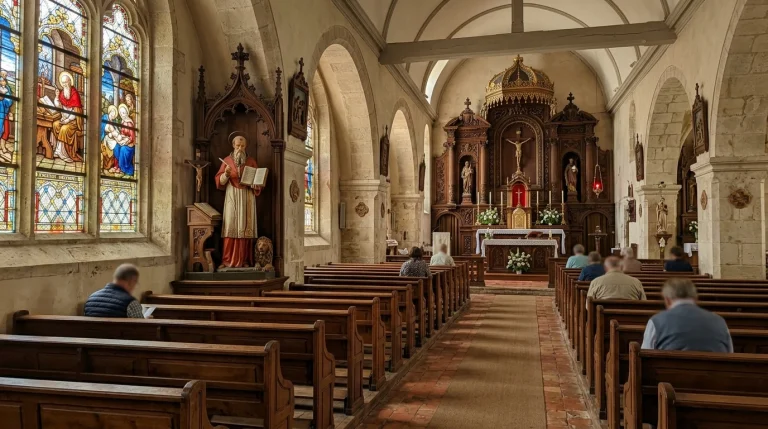
The Heritage of St. Jerome’s Church — Doctor of the Bible and Faith

The Heritage of St. Jerome’s Church — Doctor of the Bible and Faith

The Heritage of St. Jerome’s Church encompasses Catholic theological principles, historical foundations, and sacramental practices regarding st jerome’s church. In Roman Catholic tradition, this topic reflects the teachings of Sacred Scripture, the Magisterium, and centuries of pastoral ministry. In the Catholic Church, understanding st jerome’s church requires exploring foundational theology, canon law, and lived liturgical…
Are Churches Catholic? The Surprising Truth About the ‘Universal’ Church

Are Churches Catholic? The Surprising Truth About the ‘Universal’ Church

Are Churches Catholic? The Surprising Truth About the ‘Universal’ Church ⚡ Quick Answer: If you are wondering, “are churches catholic,” the direct answer is no: not all Christian churches are Roman Catholic, but almost all historic Christian denominations consider themselves part of the “catholic” (universal) church. The confusion stems from a single word that has…

Comparative Selection & Benchmark Matrix

The comparative selection and benchmark matrix below evaluate scoring criteria, structural benchmarks, and verified use-case fit.

Catholic Traditions — Comparative Selection & Benchmark Matrix
Evaluative ResourceEvaluation Benchmarks & CriteriaBest Suited For
Are Churches Catholic? Understanding the Universal Church & Apostolic TraditionEtymology of katholikos (Ignatius of Antioch, c. 110 AD), Four Marks of the Church, and denominational continuityEcclesiological Analysis

Selection & Comparison Questions

Selection and comparison questions resolve key differences in evaluation criteria, structural requirements, and strategic fit.

What is the difference between Sacred Tradition and ecclesial customs in Catholicism?

Sacred Tradition (capital 'T') refers to the unchangeable deposit of faith handed down from the Apostles alongside Sacred Scripture (CCC §§ 80–83), whereas ecclesial traditions (lowercase 't') are adaptable devotional practices, liturgical disciplines, and regional customs regulated by church authority.

Where did the term 'Catholic' originate in early Christian history?

The Greek adjective katholikos, meaning 'universal' or 'according to the whole,' was first recorded in Christian literature by St. Ignatius of Antioch in his Letter to the Smyrnaeans (Chapter 8, c. 110 AD) to describe the unified Church gathered around its bishop.