

Why the Catholic Church Is Not the True Church? Examining Ecclesiastical Claims!
Why the Catholic Church Is Not the True Church? Examining Ecclesiastical Claims!
Throughout history, the Catholic Church has stood as an emblem of religious authority and theological truth for millions of people around the world. Yet, as we delve into the intricate fabric of ecclesiastical claims, it becomes paramount to question the legitimacy of this institution as the definitive representation of the true Church. In this thought-provoking article, we will explore the foundations of Catholicism, critically examining historical facts, theological perspectives, and religious divergence to shed light on the complexities of ecclesiastical claims. Prepare to embark on a journey of unbiased inquiry, as we unveil the nuanced truths that lie behind the grandeur of the Catholic Church.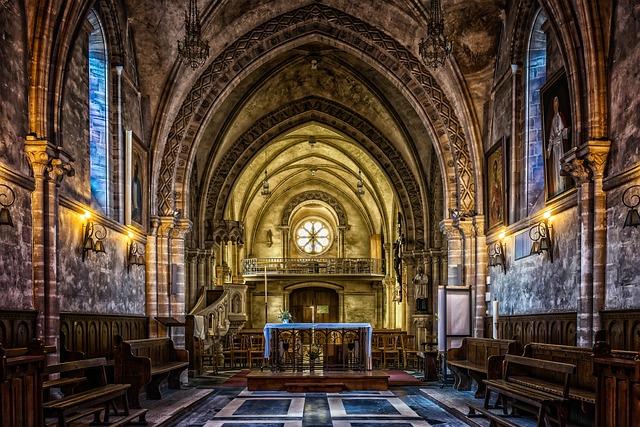
Contents
- Why the Catholic Church’s Claim as the True Church is Questionable
- – Examining Historical Context and Origins
- – Critically Analyzing Doctrinal Inconsistencies
- – Evaluating the Authority of the Magisterium
- – Challenging Exclusive Interpretation of Scripture
- – The Question of Infallibility and Papal Decisions
- – Comparing Practices and Rituals to Early Christianity
- – Exploring Allegations of Corruption and Scandals
- – Considering the Church’s Stance on Social Issues
- Examining the Ecclesiastical Claims
- - Alternative Christian Denominations: A Viable Option
- Examining Ecclesiastical Claims: Why the Catholic Church Is Not the True Church?
- Addressing Protestant and Secular Criticisms
- Key Takeaways
- Navigating Ecclesiastical Claims and Theological Debates
Why the Catholic Church’s Claim as the True Church is Questionable
When it comes to claims of being the true church, the Catholic Church has long held a significant position. However, upon closer examination, several factors raise legitimate questions about the validity of this claim. Let’s explore some key points that challenge the Catholic Church’s assertion as the true church:
1. Interpretation of Scripture:
The Catholic Church places immense importance on its authority to interpret scripture. While this can be seen as a strength, it also opens avenues for interpretation bias and potential misinterpretation. Other Christian denominations argue that individual believers possess the ability, through the guidance of the Holy Spirit, to understand and interpret scripture for themselves.
2. Papal Infallibility:
The concept of papal infallibility, which declares the Pope’s pronouncements on faith and morals as divinely inspired and incapable of error, is a significant tenet of the Catholic Church. However, this doctrine has faced critiques from those who believe it grants excessive authority to the Pope and conflicts with the belief in the ultimate authority of God’s word.
3. Doctrinal Differences:
There are numerous doctrinal differences between the Catholic Church and other Christian denominations. Topics such as the authority of tradition, the perpetual virginity of Mary, the veneration of saints, purgatory, and the process of salvation have long been points of contention, causing many to question the Catholic Church’s claim to exclusivity.
4. Historical and Cultural Context:
It is essential to consider the historical and cultural context in which the Catholic Church has developed and grown. Throughout history, the Catholic Church has faced controversies, scandals, and periods of corruption, leading some to question whether this aligns with the image of the true church. Additionally, the Catholic Church’s prominence owes much to historical circumstances rather than conclusive evidence of its exclusive divine designation.
In conclusion, while the Catholic Church has a rich history and deep religious traditions, the claim that it is the true church is not without its challenges. Scriptural interpretation, papal infallibility, doctrinal differences, and historical context all contribute to the questioning of this claim. Ultimately, individual beliefs and personal exploration of faith are crucial in determining one’s beliefs about the true church.

– Examining Historical Context and Origins
When considering the claim of the Catholic Church to be the true church, it is crucial to analyze its historical context and origins. By examining the roots of the Catholic Church, we can gain a deeper understanding of its development and assess the validity of its ecclesiastical claims.
Historically, the Catholic Church emerged as a distinct entity during the early centuries of Christianity. However, it is important to note that it was not the only Christian community at the time. Various other branches and sects existed, each with their own interpretations of scripture and practices. The Catholic Church’s claim to supremacy was not universally accepted or acknowledged by the early Christian communities.
Furthermore, the origins of the Catholic Church can be traced back to the apostle Peter, whom Catholics believe to be the first pope. However, biblical and historical evidence reveals that Peter’s role within the early Christian community was not that of a supreme authority or sole leader. Instead, he was among several influential figures who contributed to the growth and spread of Christianity.
Examining the historical context and origins of the Catholic Church sheds light on the fact that it is just one of many Christian denominations that have emerged throughout history. While the Catholic Church may have gained prominence over time, it is essential to approach its claims with a critical mindset, considering the diversity of beliefs and practices within the broader context of Christianity.
Ultimately, the determination of whether the Catholic Church is the true church lies in individual interpretation and personal beliefs. It is crucial to carefully study the historical evidence, compare different perspectives, and ultimately make an informed decision based on one’s own spiritual journey.
– Critically Analyzing Doctrinal Inconsistencies
When examining the doctrinal inconsistencies within the Catholic Church, it becomes evident that there are various factors that cast doubt on its claim to be the one true church. One such inconsistency is the issue of papal infallibility. The doctrine of papal infallibility asserts that the Pope, when speaking ex cathedra on matters of faith and morals, is incapable of error. However, this claim is not supported by historical evidence and raises questions about the authority of the Pope.
Additionally, the Catholic Church’s teachings on salvation and grace have been a point of contention for many theologians and scholars. The concept of salvation through faith alone, a central tenet of Protestant theology, contradicts the Catholic belief in the necessity of sacraments for salvation. This inconsistency highlights the divergence between the Catholic Church and other Christian denominations.
Another area of concern is the Church’s stance on social issues, such as women’s rights and LGBTQ+ rights. The Catholic Church has been criticized for its conservative views on these matters, which are at odds with contemporary values of equality and acceptance. This disconnect between the Church’s teachings and societal norms raises questions about its relevance in today’s world.

– Evaluating the Authority of the Magisterium
The authority of the Magisterium, the teaching body of the Catholic Church, has been a subject of contention for centuries. Many critics argue that the Catholic Church cannot be considered the true church due to what they perceive as shortcomings in its ecclesiastical claims. In evaluating the authority of the Magisterium, several key points need to be addressed.
Firstly, one must examine the claim of apostolic succession, which asserts that the authority of the Catholic Church is derived directly from the apostles. Critics argue that this claim lacks evidence and is based on historical uncertainties. However, supporters of the Magisterium argue that the uninterrupted succession of bishops and the preservation of doctrinal teachings throughout centuries provide a strong foundation for this claim.
Secondly, the issue of infallibility arises when discussing the authority of the Magisterium. Critics often point out that the concept of infallibility can be subjective and prone to error. However, according to Catholic teaching, infallibility is only invoked in matters of faith and morals, and it serves as a safeguard to ensure the preservation of accurate theological teachings.
Furthermore, the Magisterium’s role in interpreting Sacred Scripture and Tradition is a fundamental aspect of its authority. Critics argue that this interpretation can be biased and restricts personal understanding of religious texts. Conversely, proponents of the Magisterium argue that a centralized authority is necessary to prevent individual interpretations from leading to doctrinal divisions.
In conclusion, evaluating the authority of the Magisterium requires a thorough examination of its claims, ranging from apostolic succession to the concept of infallibility and scriptural interpretation. While critics may raise valid concerns, supporters of the Catholic Church contend that the Magisterium’s authority is grounded in historical continuity, theological preservation, and the need for a unified understanding of the faith. As with any theological discussion, differing perspectives will continue to shape the ongoing debate surrounding the true nature of the Catholic Church.
– Challenging Exclusive Interpretation of Scripture
The Catholic Church claims to be the one true Church founded by Jesus Christ Himself, but upon closer examination, we can see that this exclusive interpretation of scripture may not hold up under scrutiny. There are several key reasons why the Catholic Church’s ecclesiastical claims may not be as solid as they proclaim:
- Historical Context: The Catholic Church’s claim to be the true Church is largely based on historical tradition and interpretations of scripture dating back centuries. However, historical context and interpretation can be subjective and influenced by political and social factors.
- Doctrinal Differences: The Catholic Church’s doctrines and teachings have evolved over time, leading to significant differences between the early Church and modern Catholicism. These doctrinal changes raise questions about the continuity of the Church’s authority.
- Interpretation of Scripture: The Catholic Church’s interpretation of scripture is not the only valid interpretation. There are numerous other Christian denominations that interpret the Bible in different ways, challenging the exclusivity of the Catholic Church’s claims.
While the Catholic Church has a rich history and tradition, it is important to critically examine its ecclesiastical claims and consider alternative interpretations of scripture to gain a more comprehensive understanding of Christianity and the Church’s role within it.

– The Question of Infallibility and Papal Decisions
The Catholic Church has long claimed to be the true Church, boasting a lineage tracing back to the early apostles. However, one of the key issues that has caused many to question this assertion is the question of infallibility and papal decisions.
Infallibility, as understood by the Catholic Church, asserts that the Pope is protected from error when speaking ex cathedra, or from the seat of Peter. This means that when the Pope makes an official pronouncement on matters of faith and morals, he is guided by the Holy Spirit and cannot err. This doctrine has been a source of contention and debate both within and outside the Catholic Church.
Critics argue that the claim of infallibility contradicts the historical record, as there have been instances where popes have made questionable decisions or held beliefs that were later proven to be incorrect. Additionally, the process by which a papal decision is deemed infallible is a complex and subjective one, further raising doubts about its reliability.
Furthermore, the Catholic Church’s reliance on the Pope as the ultimate authority in matters of faith and morals raises questions about the role of the Church as a whole. This emphasis on papal authority can sometimes overshadow the role of the broader Church community and the importance of individual interpretation and discernment of Scripture.
In examining the question of infallibility and papal decisions, it is important to consider the diverse range of opinions within the Catholic Church itself. Not all Catholics subscribe to the notion of infallibility, and there have been ongoing theological discussions about the limits and scope of papal authority. Ultimately, individuals must critically engage with these questions and make their own informed decisions about what they believe to be true.
– Comparing Practices and Rituals to Early Christianity
When exploring the practices and rituals of various religious traditions, it’s important to examine and compare them to the early origins of Christianity. One such tradition that often sparks discussion is the Catholic Church. While it holds a significant place in the Christian faith, there are arguments that question its status as the true church.
A key aspect that sets the Catholic Church apart is its hierarchical structure, with the Pope as the head. Critics argue that this system deviates from the early Christian model, where local communities were autonomous and led by a council of elders. The authority vested in the Pope is seen by some as a departure from the decentralized nature of early Christianity.
Additionally, the veneration of saints and Mary within Catholicism is another point of contention. While Catholics believe that these figures play an important role in interceding with God, critics argue that this practice stems from pre-Christian pagan traditions rather than the pure teachings of Jesus and his apostles.
Furthermore, the elaborate rituals and ornate worship spaces found within Catholicism are often contrasted with the simplicity of early Christian gatherings. Critics argue that the emphasis on grand architecture and ceremony can overshadow the true essence of Christianity, which revolves around personal faith and a direct relationship with Jesus.

– Exploring Allegations of Corruption and Scandals
In recent years, the Catholic Church has faced numerous allegations of corruption and scandals, prompting many to question its claim as the true church. These allegations have deeply shaken the faith of believers and raised serious doubts about the integrity of the institution that is supposed to embody the teachings of Jesus Christ.
One of the most significant scandals to tarnish the reputation of the Catholic Church is the widespread sexual abuse of children by clergy members. Revelations of these heinous acts, which were often covered up by higher-ranking church officials, have caused immense pain and suffering to countless individuals. This shocking abuse of power has led many to question how an institution that claims moral authority could allow such atrocities to occur.
Additionally, allegations of financial impropriety have further eroded the credibility of the Catholic Church. Reports of embezzlement, money laundering, and excessive wealth within the hierarchy have raised serious concerns about the misuse of church funds and the priorities of its leaders. These allegations highlight a contradiction between the teachings of humility, compassion, and poverty preached by Jesus Christ and the opulence and materialistic lifestyles that appear to exist within the church.
While it is important to acknowledge that these scandals do not represent the entirety of the Catholic Church or its members, they have undoubtedly cast a shadow over its claim as the true church. It is crucial for the church to address and confront these allegations openly and transparently, seeking justice and providing support to survivors. Only through genuine reform and accountability can the Catholic Church hope to restore its credibility and regain the trust of its followers.
Key Points:
- The Catholic Church has faced allegations of corruption and scandals, damaging its reputation.
- Sexual abuse of children by clergy members has caused immense pain and raised questions about the church’s moral authority.
- Financial improprieties, including embezzlement and excessive wealth, have further eroded the church’s credibility.
- Addressing these allegations openly and seeking justice is crucial for the church to regain trust and restore its credibility.

– Considering the Church’s Stance on Social Issues
Exploring the Church’s stance on social issues can lead to valuable discussions and deeper understanding of its teachings. As we dive into this topic, it is important to approach it with an open mind and a willingness to critically evaluate the claims made by the Catholic Church.
Examining the Ecclesiastical Claims
The Catholic Church asserts itself as the one true Church, guided by the Holy Spirit and inheriting the teachings of Jesus Christ. However, many individuals question this claim, highlighting certain controversial stances taken by the Church on social issues. These issues range from gender and sexuality to reproductive rights and social justice concerns.
While the Church’s stance on social issues may align with certain traditional values, it is crucial to engage in discussions that analyze the reasons behind these positions. This exploration allows us to evaluate the relevance and consistency of these ecclesiastical claims in the modern world.
Challenges to the Church’s Stance
One of the main challenges to the Church’s stance on social issues arises from the evolving understanding of human rights and the need for inclusivity. Critics argue that some of the Church’s positions may perpetuate discrimination and hinder social progress. Topics such as same-sex marriage, contraception, and the role of women within the Church are often under scrutiny.
However, it is important to note that contemporary Catholics, as individuals and as a collective community, often hold diverse opinions on these matters. Many believers actively engage in conversations within the Church to create a space for dialogue, revision, and adaptation of traditional teachings to align them with modern understandings.
Seeking a Deeper Understanding
In order to evaluate the claims made by the Catholic Church on social issues, it is essential to study not only its official doctrine but also the historical context and development of these teachings. This examination requires a comprehensive approach that takes into account scripture, theological interpretations, cultural influences, and the contributions of diverse theologians and scholars throughout history.
By undertaking a critical exploration of the Church’s stance on social issues, individuals can develop an informed perspective and engage in meaningful discussions. This process encourages the growth of a more inclusive and understanding society, where different perspectives can coexist and contribute to a common goal of progress and justice.

- Alternative Christian Denominations: A Viable Option
Examining Ecclesiastical Claims: Why the Catholic Church Is Not the True Church?
When it comes to Christian denominations, the Catholic Church is often seen as the pinnacle of religious authority. However, there are alternative Christian denominations that provide a viable option for those seeking a different experience of faith. In this article, we will explore why the Catholic Church may not be the only true church and delve into the claims made by various alternative Christian denominations.
The Catholic Church’s Claim of Papal Authority
One of the primary claims the Catholic Church asserts is the authority of the Pope, who is considered the successor of St. Peter and the Vicar of Christ on Earth. While this claim holds strong within Catholicism, many alternative Christian denominations argue that the hierarchical structure and infallibility of the Pope are not biblical. These denominations place a greater emphasis on shared leadership among all believers and advocate for a more inclusive approach to governance.
Examining the Doctrine of Salvation
Another area of contention revolves around the doctrine of salvation. The Catholic Church teaches that salvation is achieved through faith, baptism, and participation in the sacraments. However, alternative Christian denominations, such as evangelical or charismatic churches, emphasize an individual’s personal relationship with Jesus Christ and the importance of accepting Him as the sole Savior. They may view the Catholic Church’s emphasis on sacraments as detracting from a direct, personal connection with God.
Exploring Worship Practices and Liturgy
Worship practices and liturgy also differ significantly among alternative Christian denominations and the Catholic Church. While the Catholic Church has a rich tradition of ritual and liturgical worship, other denominations may vary in their approach. For instance, evangelical churches often prioritize spontaneous worship and passionate expressions of faith, while some denominations focus on the simplicity of worship without elaborate ceremonies or rituals.
The Appeal of Alternative Christian Denominations
Alternative Christian denominations offer alternative perspectives that resonate with individuals seeking a different expression of their faith. These denominations provide opportunities for a more participatory role in the church, a greater emphasis on personal spirituality, and a diverse range of worship styles. The decision to explore alternative Christian denominations should be rooted in personal conviction and a desire to find a community that aligns with your beliefs and spiritual needs.
Conclusion
While the Catholic Church holds a prominent position within Christianity, it is essential to recognize that alternative Christian denominations offer valid and viable options for worship and spirituality. By examining claims related to ecclesiastical authority, salvation doctrine, and worship practices, individuals can find a spiritual home that resonates deeply with their beliefs and personal journey of faith.
Addressing Protestant and Secular Criticisms
In theological debates, critics often present arguments for why catholicism is not right or provide a reason why catholic church is wrong. Many modern discussions revolve around historical controversies, leading some to claim that the truth is coming out about the catholic church regarding past institutional failings. When people ask, is the catholic church the true church, Catholic apologists point to apostolic succession, whereas critics focus on the “ugly truth about the catholic church” and doctrinal differences regarding papal infallibility and salvation, arguing for alternative biblical interpretations.
Key Takeaways
In conclusion, exploring the topic of ecclesiastical claims and the true church leads us to question the longstanding beliefs surrounding the Catholic Church. While it undoubtedly holds immense influence and historical significance, it is essential to examine the evidence and consider alternative perspectives. By delving into the historical context and theological aspects of other Christian denominations, we uncover a complex tapestry of beliefs and interpretations that challenge the idea of a single “true church.” It is through critical thinking and open-mindedness that we can better understand the diverse landscape of Christianity and find our own spiritual path. Realizing that the concept of a “true church” may be more subjective than previously thought opens doors to a broader and more inclusive understanding of faith. As we continue to question and engage in dialogue, we move closer to a collective appreciation for the incredible diversity within Christianity and the multitude of ways individuals connect with the divine.
Throughout Christian history, believers have frequently debated ecclesiastical authority, prompting many to ask, is the catholic church the true church? For centuries, critics and Protestant reformers have put forth theological arguments explaining why is catholicism wrong in their view, pointing to differences in doctrines such as papal infallibility, the veneration of saints, and the sacraments. Understanding why catholicism is wrong from a non-Catholic perspective is essential for respectful ecumenical dialogue and deeper theological study.
On the other hand, defenders of the faith robustly answer these critiques. When exploring the question, “how do we know that the catholic church is the true church? catholic answers usually point to apostolic succession, historical continuity dating back to St. Peter, and the unified teachings of the Magisterium. By carefully examining both the criticisms and the foundational apologetics, believers can form a more educated, well-rounded understanding of their own faith and the broader Christian tradition.
Get our latest guides, news, and insights highlighted in your Google Search & AI Overviews.




 CLASSIFIED INFORMATION ALERT