
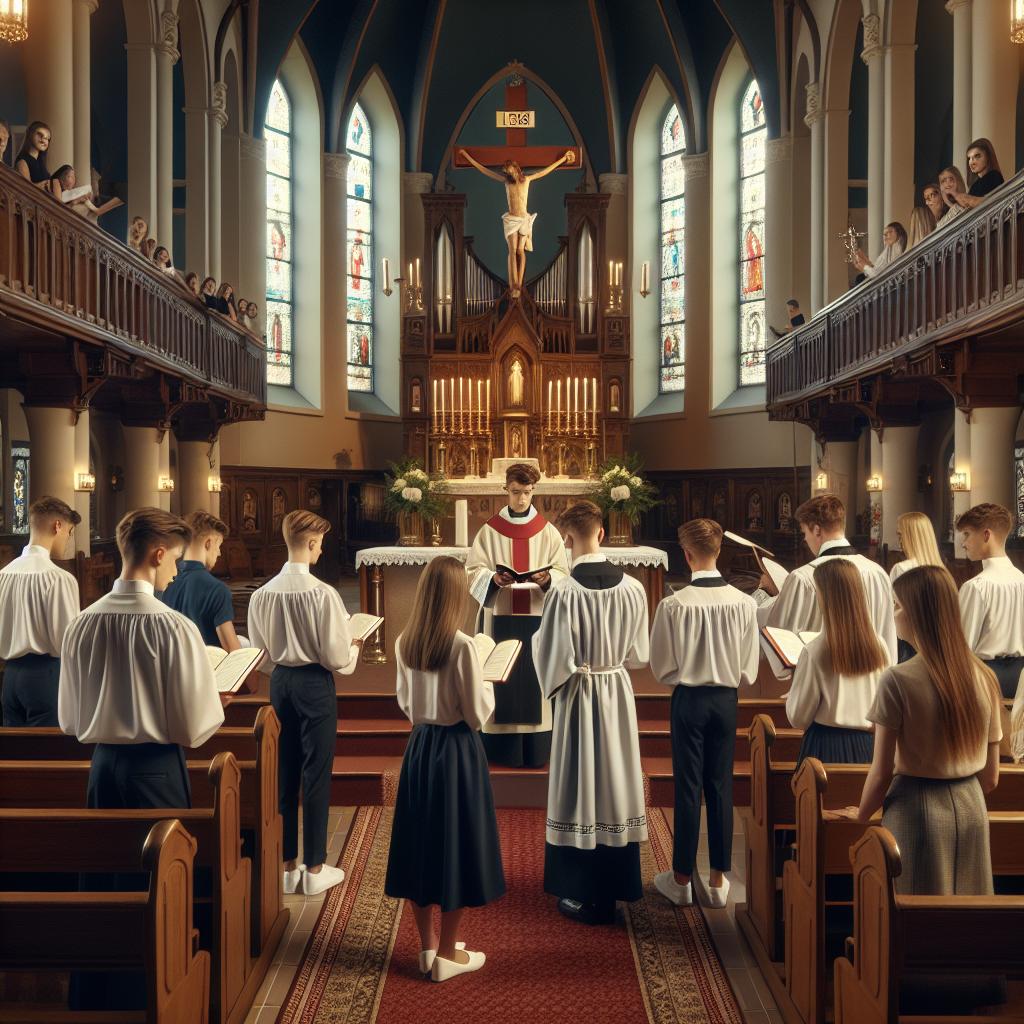
How to Become an Altar Server: Training and Requirements
Are you interested in becoming an altar server but not sure where to start? In this article, we will walk you through the training and requirements needed to become an altar server. Whether you are new to the role or looking to enhance your skills, we have all the information you need to succeed in this important position within the church.
Contents
- How to Begin Your Journey as an Altar Server
- Understanding the Role and Responsibilities of an Altar Server
- Essential Training for Altar Servers
- Practical Tips for Mastering Altar Server Duties
- Requirements and Qualifications for Altar Servers
- Building a Strong Foundation in Faith and Service
- Enhancing Your Skills Through Continued Practice
- Seeking Mentorship and Guided Support as an Altar Server
- Contributing to the Spiritual Community as an Altar Server
- Training and Requirements
- To Conclude
How to Begin Your Journey as an Altar Server
Before you can begin your journey as an altar server, it’s important to understand the training and requirements involved. Altar serving is a sacred role within the Catholic Church, and as such, there are certain expectations that must be met.
One of the first steps in becoming an altar server is to speak with your parish priest or coordinator. They will be able to provide you with information on the training process and any specific requirements that may need to be met. Training typically includes instruction on the various parts of the Mass, as well as proper procedures for serving at the altar.
Some common requirements for altar servers may include:
- Receiving First Holy Communion
- Attending regular Mass and confession
- Demonstrating a willingness to serve and a reverence for the Eucharist
| Training | Requirements |
|---|---|
| Instruction on Mass parts | First Holy Communion |
| Proper serving procedures | Regular Mass attendance |
| Willingness to serve and reverence |
By meeting these requirements and completing the necessary training, you’ll be well on your way to beginning your journey as an altar server. Remember, this is a special role that requires dedication and respect, but it can also be a rewarding and fulfilling experience.

Understanding the Role and Responsibilities of an Altar Server
Altar servers play a crucial role in assisting during religious ceremonies, particularly in the Catholic Church. Their responsibilities are varied and important, requiring a strong understanding of the rituals and traditions of the faith. Here is a breakdown of the typical duties and expectations of an altar server:
- Assisting the Priest: Altar servers work closely with the priest to ensure that the ceremony runs smoothly. This may include holding the priest’s book, carrying the candles, and preparing the altar for communion.
- Setting the Altar: Before the service begins, altar servers are responsible for setting up the necessary items for the ceremony, such as the chalice, paten, and ciborium.
- Participating in Processions: Altar servers often lead processions into and out of the church, carrying the crucifix or other religious symbols.
- Assisting Parishioners: Altar servers may also assist parishioners during the service, such as helping them find their place in the missal or directing them during communion.
Essential Training for Altar Servers
Altar servers play a crucial role in assisting priests during worship services. As an altar server, you are responsible for various tasks that help facilitate a smooth and seamless worship experience for parishioners. To become an altar server, you must undergo essential training to prepare you for the responsibilities that come with the role.
During altar server training, you will learn:
- The proper way to light and extinguish candles
- How to assist the priest during Mass
- The significance of each item used during the service
- Proper etiquette and behavior while serving
Additionally, altar servers are usually required to meet certain criteria, including:
- Having received their First Holy Communion
- Attending regular church services
- Being of a certain age (usually between 8-18 years old)
- Showing a willingness to serve and a commitment to their faith
By completing the essential training and meeting the requirements, you can become a valued member of the altar server team and contribute to the spiritual experience of your fellow parishioners.
Practical Tips for Mastering Altar Server Duties
When it comes to mastering altar server duties, there are a few practical tips that can help you excel in your role. Whether you are just starting out or looking to improve your skills, these tips will guide you towards becoming a successful altar server.
- Attend Training Sessions: Make sure to attend any training sessions provided by your church or parish. This will help you learn the proper protocols and procedures for serving at the altar.
- Learn the Order of the Mass: Familiarize yourself with the order of the Mass so that you know when to ring the bells, light the candles, and assist the priest during different parts of the service.
- Practice Proper Etiquette: Maintain a respectful and reverent demeanor while serving at the altar. Remember to bow when passing in front of the tabernacle and speak quietly when communicating with the priest.
- Stay Focused and Attentive: Pay attention to the priest’s cues and remain focused on your duties throughout the service. This will help ensure a smooth and seamless worship experience for all.

Requirements and Qualifications for Altar Servers
Before becoming an altar server, there are certain requirements and qualifications that need to be met. Here is a list of things you need to know:
- Age: Altar servers are typically children or youth, ranging from 8 to 18 years old.
- Attend training sessions: Altar servers are required to attend training sessions to learn about the duties and responsibilities involved.
- Be a baptized Catholic: In most cases, altar servers are required to be baptized Catholics to serve at the altar.
- Commitment: Altar serving requires a commitment to attending Mass regularly and being available for scheduled services.
Altar servers play an important role in the liturgical celebrations of the church, assisting the priest during Mass and other services. If you meet the requirements and qualifications, consider reaching out to your parish priest to express your interest in becoming an altar server.
Building a Strong Foundation in Faith and Service
To become an altar server, there are several training and requirements that need to be met. Firstly, it is essential to have a strong foundation in faith and service, as this role is an important aspect of serving the church community. Altar servers play a significant role in assisting the priest during Mass and other liturgical celebrations, therefore a deep understanding of the faith is crucial.
Training for altar servers typically involves learning about the different parts of the Mass, understanding the significance of each item used during the celebration, and practicing proper etiquette while serving at the altar. Servers may also be required to attend training sessions or workshops to hone their skills and deepen their understanding of their role in the church.
In addition to training, there are certain requirements that altar servers must meet. These may include being of a certain age, having received the sacraments of Baptism and First Holy Communion, and demonstrating a commitment to serving the church community. Altar servers are often seen as role models for younger members of the congregation, so it is important for them to uphold the values of faith and service in all that they do.
Overall, becoming an altar server is a rewarding experience that allows individuals to deepen their connection to their faith and serve their community in a meaningful way. By , altar servers can make a positive impact on the church and inspire others to do the same.
Enhancing Your Skills Through Continued Practice
To become an altar server, you must first undergo proper training and meet certain requirements. Training typically involves learning about the order of the mass, the duties of an altar server, and how to properly handle liturgical items. It is essential to practice and familiarize yourself with the responsibilities involved in serving at the altar.
Requirements for becoming an altar server may vary depending on the church or religious institution. Some common requirements include being baptized and having received First Holy Communion. Additionally, a willingness to serve with reverence and respect is crucial for anyone interested in becoming an altar server.
Continued practice is key to enhancing your skills as an altar server. Regularly attending mass and volunteering to serve at the altar can help you improve your understanding of the liturgy and strengthen your abilities. By dedicating time to practice and honing your skills, you can become a proficient altar server who contributes meaningfully to the worship experience for the congregation.
Remember, becoming an altar server is a fulfilling and rewarding experience that requires dedication and commitment. By undergoing proper training, meeting requirements, and practicing regularly, you can enhance your skills and serve with excellence at the altar.
Seeking Mentorship and Guided Support as an Altar Server
can greatly enhance your experience and skills in serving at the altar. Having a mentor to help you navigate the responsibilities and requirements of being an altar server can provide valuable guidance and support along the way. Here are some key points to consider when looking for mentorship as an altar server:
- Find an experienced altar server: Look for someone who has been serving at the altar for a while and is willing to mentor you.
- Ask for guidance: Don’t be afraid to ask questions and seek advice from your mentor on how to improve your skills and serve more effectively.
- Attend training sessions: Take advantage of any training sessions or workshops offered by your church to enhance your knowledge and understanding of your role as an altar server.
Remember, mentorship can be a valuable tool in helping you grow and develop as an altar server. Don’t hesitate to seek out support and guidance from experienced individuals in your community to help you along your journey.

Contributing to the Spiritual Community as an Altar Server
Training and Requirements
As an altar server, you play a crucial role in the spiritual community by assisting the priest during Mass and other religious ceremonies. To become an altar server, you will need to undergo training and meet certain requirements. Here’s what you need to know:
- Training: Typically, altar server training involves learning the various roles and responsibilities during the Mass, such as carrying candles, holding the book for the priest, and assisting with the Eucharist. Training sessions are usually conducted by experienced altar servers or clergy members.
- Requirements: While requirements may vary depending on the church or parish, common criteria for altar servers include being baptized and receiving First Communion, attending regular Mass, having a deep reverence for the Eucharist, and demonstrating a willingness to serve the community.
If you are interested in becoming an altar server, reach out to your church or parish office to inquire about training sessions and requirements. Serving as an altar server is a meaningful way to contribute to the spiritual community and deepen your connection to your faith.
To Conclude
Becoming an altar server is a fulfilling and important role within the church. By following the training and requirements outlined in this article, you can embark on a journey to becoming a dedicated and knowledgeable altar server. Serve with pride and reverence, and may your service bring you closer to your faith and community. Remember, being an altar server is not just a duty – it is a privilege. Embrace the opportunity to assist in the celebration of Mass and the worship of God. If you have any additional questions or concerns, feel free to reach out to your local parish for more information. Best of luck on your journey to becoming an altar server!


 ELITE NEUROSCIENCE DISCOVERY